Table of Contents
Report
Wearable UV meter

Authors:
- Elin Lönnqvist
- Marion Cullié
- Miquel Francesc Borras Bermejo
- Mikk Tootsi
- Simone Smits
Acknowledgement
Team two would like to thank ISEP for this great opportunity to participate in the European Project Semester in Porto. The Team appreciates all the useful advices, feedback and support throughout the project from their supervisors and teachers. A special thanks to the Team supervisor, Paulo Ferreira, for sharing all his expertise and technical knowledge.
Glossary
| Abbreviation | Description |
|---|---|
| ADC | Analog to Digital Converter |
| B2B | Business to Business |
| B2C | Business to Consumer |
| BCC | Basal Cell Carcinoma |
| BLE | Bluetooth Low Energy |
| CAD | Computer Aided Design |
| CPU | Central Processing Unit |
| DC | Direct Current |
| DIY | Do It Yourself |
| DNA | Deoxyribo Nucleic Acid |
| EAN | European Article Numbering |
| EEPROM | Electrically Erasable Programmable Read Only Memory |
| EPS | European Project Semester |
| GPS | Global Positioning System |
| GS1 | Global Standards |
| ISEP | Instituto Superior de Engenharia do Porto |
| ISO | International Organization for Standardization |
| LED | Light Emitting Diode |
| NMSC | Non-Melanoma Skin Cancer |
| PET | PolyEthylene Terephtalate |
| ROHS | Restriction of Hazardous Substances |
| RSC | Regular Slotted Container |
| SCC | Squamous Cell Carcinoma |
| SPF | Sun Protection Factor |
| SRAM | Static Random Access Memory |
| TPE | Thermoplastic Elastomers |
| TPSiV | Thermoplastic Silicone Vulcanizate |
| UART | Universal Asynchronous Reciever/Transmitter |
| USB | Universal Serial Bus |
| UV | UltraViolet |
| VCC | Virtual Channel Connection |
| WBS | Work Breakdown Structure |
1. Introduction
1.1 Presentation
The Team is an interdisciplinary and international group of 5 members, who take part in the European Project Semester (EPS) 2016/2017 spring edition at Instituto Superior de Engenharia do Porto (ISEP). For one semester the Team is going to combine the different backgrounds and strengths of its members to work on the project Wearable UV meter. This diverse and highly motivated team consists of:
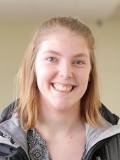 |  | 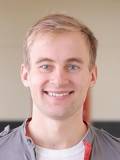 | 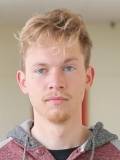 | 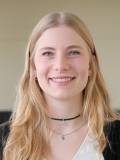 |
| Elin from Finland | Marion from France | Mikk from Estonia | Miguel from Spain | Simone from Holland |
| Industrial Management | Packaging Engineering | Electrical Engineering | Industrial, Product & Graphic design | Biology & Medical Laboratory Research |
1.2 Motivation
The Team has chosen the wearable UltraViolet (UV) meter as their project because they believe that their different skill sets and knowledge in their own field suit well with the project. The authors see this as a great learning experience and hope to obtain more technical knowledge from both the project and each other. Moreover, they want to take this opportunity to develop and improve their soft skills.
The UV solar radiation has positive and negative health effects. It is a natural source of vitamin D, also called serum 25(OH)D, a hormone that controls calcium levels in the blood. It is needed to develop and maintain healthy bones, muscles and teeth. Vitamin D is made through a series of biochemical processes that start when the skin is exposed to the Sun’s UV rays. However, UV radiation is also a mutagen. Meaning UV photons that are able to bypass the natural defences of the skin and melanin, can cause mutagenic damage to the deoxyribonucleic acid (DNA). By changing the skin's cellular DNA, excessive UV radiation produces genetic mutations that can lead to several skin cancers. Suntan, freckling and sunburn are familiar effects of over-exposure, along with early ageing of the skin (photo ageing), wrinkling and eye damage. UV radiation may also cause suppression of the immune response system. The dangers of UV exposure are undeniable, and public ignorance concerning these matters could lead to increased health problems in the future [(UVhealth)]. With the wearable UV meter the Team hopes to develop a device that will protect the user from the effects of over-exposure, like sunburning, photo ageing and eye damage, and eventually decreasing their risk of developing skin cancer.
1.3 Problem
As mentioned before, the dangers of UV exposure are undeniable and public ignorance can lead to increased health problems in the future. However, not every type of UV radiation is as harmful as the other. UV radiation is divided into, at least, three different groups; these groups are classified according to their wavelength:
• UltraViolet A (UVA) wavelengths (320-400 nm)
• UltraViolet B (UVB) wavelengths (280-320 nm)
• UltraViolet C (UVC) wavelengths (100-280 nm)
The types of UV radiation differ in their biological activity and the extent to which they can penetrate the skin. If the wavelength is shorter, the UV radiation is more harmful. However, shorter wavelength UV radiation is less able to penetrate the skin. As represented in Figure 1 UVB doesn’t penetrate the skin as much as UVA. However, UVB damages skin cells called keratinocytes in the basal layer of the epidermis, where most skin cancers occur. UV radiation is considered the main cause of nonmelanoma skin cancers (NMSC), including basal cell carcinoma (BCC) and squamous cell carcinoma (SCC). These cancers strike more than a million people worldwide each year [(UVhealth)].

Although the short-wavelength UVC is the most damaging type of UV radiation, it is completely filtered by the atmosphere and does not reach the Earth's surface. Which leads us to the next problem, the global stratospheric ozone levels have reduced, which means that the ozone layer is changing and the Earth's surface is exposed to more of the shorter UV wavelengths. The depletion of the ozone layer will increase the UV-radiation at ground level and for each 10 % depletion of the ozone layer, we can expect 20 % more radiation in these damaging wavelengths [(UV)].
1.4 Objectives
This project had two complementary goals. The first was at the educational meta-level – to foster multicultural multidisciplinary teamwork, autonomous problem-solving and ethical and sustainable development practices – and the second at the design and implementation level – to develop and test a wearable UV meter based on the technical, marketing, sustainability and ethical analyses, as well as on the needs of the user. In particular, the Team's objective was to develop a user-friendly and waterproof device to be worn as a bracelet or a clip-on. In the first instance, this wearable UV meter should depict an indication of the UV index (from 1 to 11) and should notify the user in case of over-exposure or under-exposure to UV radiation. Also, the notifications can be done by means of a mobile application running on a smartphone.
1.5 Requirements
The project requirements are:
- Not exceed the budget of 100 €
- Uses low cost hardware solutions
- Uses open source software and technologies
- Comply with the following EU Directives:
- Machine Directive (2006/42/CE 2006-05-17);
- Electromagnetic Compatibility Directive (2004/108/EC 2004 12 15);
- Low Voltage Directive (2014/35/EU 2016-04-20);
- Radio Equipment Directive (2014/53/EU 2014-04-16);
- Restriction of Hazardous Substances (ROHS) in Electrical and Electronic Equipment Directive (2002/95/EC 2003-01-27);
- Mandatory adoption and use of the International System of Units (The NIST International Guide for the use of the International System of Units)
1.6 Functional Tests
Once the prototype is ready, diverse tests will be done to ascertain it is working properly:
- UV sensor test - The device has to be taken outside on different days and compare the calculated UV index with the news-reported index.
- Waterproof test - The device needs to be put into salt and fresh water for at least an hour and 1 meter deep. Afterwards the device should be tested to be sure that it will still work properly.
- Wearability test - Over one week the device will be given to different people to use and eventually the feedback will be collected from them.
- Robustness test - To make sure that the device is robust, the device should be tested if it is strong enough and if the device can be dropped without breaking.
- Software test - To test all the different possibilities and see that the codes will work accordingly.
1.7 Project Planning
Project management is essential, as it is shown in Chapter 3.2. Therefore, when all tasks were identified, the Team allocated them to a responsible team member according to their special field. Table 1 is the project planning.
| Task | Responsible |
|---|---|
| Project studies | |
| Task allocation | The Team |
| Gantt Chart | Marion |
| Studies | |
| Marketing Plan | Elin |
| Eco-efficiency Measures for Sustainability | Simone |
| Ethical and Deontological Concerns | Elin |
| Packaging | Marion |
| Materials | The Team |
| System Diagrams | Simone |
| Structural Drafts | Miguel |
| System schematic & structural drawings | Miguel Mikk |
| List of materials | Mikk |
| Project development | |
| Build prototype | The Team |
| Testing | The Team |
| Packaging | Marion |
| Deliverables | |
| Leaflet | Marion |
| Report | The Team |
| Presentation | Elin |
| Paper | Simone |
| Poster | Miguel |
| Video | Mikk |
| Manual | Marion |
| Website | Simone |
| Arduino code | Mikk |
1.8 Report Structure
The structure of the report is presented in Table 2, it shows all of the chapters and what they contain.
| Chapter | Title | Description |
|---|---|---|
| 1 | Introduction | Introducing the team, objectives, requirements, tests, and the planning and structure of the report |
| 2 | State of the Art | Explanation UV meter, analysis of the competitors |
| 3 | Project Management | Scope, time, budget and organisation |
| 4 | Marketing Plan | Strategy, target and advertising |
| 5 | Eco-efficiency Measures for Sustainability | Economical, environmental and social sustainability, Life Cycle analysis |
| 6 | Ethical and Deontological Concerns | Engineering, environmental, sales and marketing ethics, liability |
| 7 | Project Development | Progress and development of the wearable UV meter |
| 8 | Packaging | Casing of the device and the graphics |
| 9 | Conclusions | Discussion, future development and conclusion of the project |
2 State of the Art
2.1 Introduction
This chapter presents the state of the art, meaning the highest level of development of a technology, art, or science. In this chapter the Team will explain what a UV meter indicates and includes the research on several existing products on the market containing its functions. They first had to discover what kind of wearable UV meters already existed on the market and understand why they are attractive to the user. There are thousands of wearable UV meters purchasable, for example on Amazon. Analysing all the different wearable UV meters would be impossible. The Team has chosen 5 popular wearable UV meters which they compare by pointing out their advantages and disadvantages. Furthermore, variables the competitors use to give personal based advice on protection for the customer. Finally, the Team focuses on the different materials that were used and the materials that will suit our device best. Considering the research done, the Team came to a final conclusion on how the design of the wearable UV meter and final prototype should look.
2.2 UV radiation measurement
The intensity of the UV radiation corresponds to the energy received per second by a surface measured in mW/cm² or, alternatively, to the energy received per unit area in a given period of time measured in mJ/cm². There are several ways to obtain information on UV radiation at the surface, like UV meters that measure the UV intensity weighted over a broad spectral interval. Most UV meters cover the wavelength spectrums of UVA and UVB, because UVC is filtered by the atmosphere and does not reach the Earth's surface. To measure the UV radiation from the Sun the UV meter needs an UV sensor that can detect the range of UV light (see more information about UV sensors in Chapter 7.4).
In 1992, Canada introduced the UV index to quantify the levels of UV radiation at the surface of the Earth for the general public. The UV index scale runs from 0 (when there is no sunlight) to 11+ (extreme). These values give an indication of the expected risk of overexposure to UV radiation and predict the UV intensity levels on a scale of 0 to 11, with 5 different colours. The index was approved as a standard indicator of UV levels by the World Meteorological Organization (WMO) and World Health Organization (WHO) in 1994 and takes into account several location-based variables [(UVindex)] :
- The thickness of the ozone layer over the site (detected using satellites).
- The cloud cover over the site (clouds block UV radiation).
- The time of year at the site (UV radiation in the winter is lower than in the summer because of the Sun rays).
- The altitude of the site (higher locations get more UV radiation).
Thus the UV index ranges from 0 to 11 and higher, with zero being minimal UV exposure risk. Figure 2 displays the UV index and the corresponding advice on protection.

2.3 Analysis of the existing products
2.3.1 Existing products
There are several types and shapes of wearable UV meters ranging from bracelets, clip-ons, keychains, UV cards, UV patches, body stickers and mobile phone applications. Some of this devices use different variables to give personal advice on protection. The most common variables are skin type, eye colour, hair colour, the amount of Sun Protection Factor (SPF) the user put on. For classifying a person’s skin type the Fitzpatrick Skin Type scale is mostly used. It is based on skin response to Sun exposure in terms of the degree of burning and tanning and shows six main skin types [(UVskin)].
The first research the Team has done was about the competitors. The different types of wearable UV meters, commercially available, are displayed in Figure 3.

2.3.2 Existing UV bracelets and clip-on devices
After the research the Team decided to focus on UV meters in the shape of a bracelet or a clip-on. This decision was made as result of the choices on their device being both a bracelet and a clip-on. The comparison of these particular competitors is visible in Table 3.
| Product | Description | Advantage | Disadvantage |
|---|---|---|---|
Microsoft Band  [(MicrosoftBand)] [(MicrosoftBand)] | A fitness-tracker with UV-detecting technology, it tracks your activity, gives notifications and monitors UV exposure. | UV radiation: 295 nm to 325 nm, the most damaging wavelengths, and delivers an almost instant reading that is correlated to the real-time UV index. | Expose the sensor to get a reading, notifications are not based on the exact skin type, most expensive, not waterproof, temperature tolerate -10 °C to + 40 °C |
Raymio  [(Raymio)] [(Raymio)] | Data are stored, informations in continues think to an application, To ensure accuracy, the unit utilizes internal directional sensors. | It registers the UVA and UVB exposure and offers personalized protection according to your skin type through an application. Waterproof | Detailed information on application, but not on the Raymio device itself. |
June by Netatmo  [(Netatmo)] [(Netatmo)] | Designed to be worn on the wrist or clipped on a piece of clothing, the UVA and UVB-sensing device transmits data to a mobile application, which analysis the wearer's sun exposure (warnings and recommendations) and the current UV index. | Designed looking as jewerly. Skin type and UV exposure, June calculates daily sun dose and updates you on how much of it you've had. | Not waterproof. No information at all on the device, only in the application. Autonomy not reliable. |
Sunsprite  [(Sunsprite)] [(Sunsprite)] | SunSprite is a small wearable clip-on device you can use to track the light and sun exposure and store the data on your smartphone. | Light-weighted. Re-charges through solar power, no cables needed. Light emitting diode (LED) evolution to indicate daily light the body needs. | Design. SunSprite is not waterproof. It shouldn’t be worn while swimming or showering. |
The CliMate by Rooti  [(CliMate)][(CliMatepicture)] [(CliMate)][(CliMatepicture)] | This clip-on is a small cloud-shaped device that measures the temperature, humidity and UV Index. | Syncs with mobilephone wirelessly and provides a plan of action for the user, including considerations for skin protection (enter skin type and type of sunscreen you have on) and the app will alert the user when it's time to reapply. Temperature tolerate: -20 °C to +65 °C | It has the tendency to be easily turned off by the button, meaning the data won't be collected when it's off. |
2.3.3 Functionalities
Nowadays, every technological device is multi-purpose and as the Helios product wants to be the leader in the market, they need to know what the main functionalities of our competitors are. Table 4 below shows the functionalities, information output and price of the several wearable UV meters.
| Competitor | Functionalities | Information mode | Price |
|---|---|---|---|
| Microsoft Band | Health care; Sleep helper; Calories tracker; Personal trainer; Watch; GPS | Touchscreen, vibration, microphone | 124.99 € - 249.99 € |
| Raymio | Suncoach | By a red LED around UV sensor and an application | 40.42 € |
| June | Daily sun dose | Application | 49.99 € |
| Sunsprite | Suncoach | LED gauge and application | 93.00 € |
| CliMate | Temperature, Humidity, UV indexation | Application | 41.90 € |
2.3.4 Components and Materials
In the devices of the competitors, several types of materials are used. However, plastic is the most common one. In order to be different, the Team listed the components and materials used by the competitors.
2.3.4.1 Components
First one of the existing devices is the Microsoft Band, it is the market leader. This multifunctional watch includes a Global Positioning System (GPS) receiver, UV sensor, personal trainer, sleep helper and calories tracker, as well as a health care option. The list of the components that are inside the wearable device, is shown in Table 5.
 |
| CPU : Freescale Kinetis K24 32-bit ARM Cortex-M4; MK24 FN1M0V12 |
| RAM : Cypress 2 MB SRAM; CY62167EV18LL-55BVXI |
| Storage : Macronix 64 MB nonvolatile flash memory; MX66U51235FXDi |
| Bluetooth : Atheros Bluetooth 4.0 Low Power; 3002-BL3D |
| Batteries: 2 LiPo Batteries, 72 mAh each : 48 hours of autonomy; Magnetic connector |
| Flexible PCB |
| Screen: AMOLED resolution 320 x 128 pixels |
Figure 4 displays a complete picture of all the components of which it consists. The Team also analysed the UV sensor positioning, presented in the Figure below.


Second is the Raymio, one of the components is a UV sensor that measures UVA and UVB. Additionally, the device contains an accelerometer and a gyroscope. An accelerometer is a motion sensor and a gyroscope is a rotation sensor (see Figure 5). Even if the Raymio sensor doesn’t face the Sun, it won’t presume that the user is not exposed to sunlight, the algorithms will compensate for temporary drops in input or if the sensor is in a face-down position. Another component is the rechargeable lithium-ion polymer battery, this battery takes about an hour the recharge. One charge powers 48 hours of expected normal usage.


Figure 6 displays the early 3D print of the Raymio band and the first prototype, it uses UV algorithms and the UV circuit to measure the UV radiation. Now they have developed a much more hardware to fit in the Raymio band.

Next is the wearable UV meter June by Netatmo. After looking at the skin type of the user and the UV exposure, June calculates the recommended daily Sun dose and updates the user on how much of it he or she has had through a mobile application. Table 6 shows the inside of the June and the list of components.
 |
| NRF51822 Nordic bluetooth low energy ARM cortex chip |
| 16 MHz crystal |
| 32 KHz crystal |
| Flex PCB antenna |
| SWD programming pads |
| CR1220 rechargeable coincell |
| Battery charging circuit |
| UV LED die |
| Opamp |
The SunSprite is a thumb-sized device with 10 LED lights that light up, based on a person’s percentage of light exposure (presented in Figure 7). Enclosed inside the user will find dual visible and UV sensors, the positions of these sensors can be seen in the Figure below. Besides the two sensors the user will find a Bluetooth Smart sync capability, a custom-built polymer battery, flexible magnetic clasp, and solar cells, which are extremely high-efficiency custom modules.

The CliMate by Rooti claims to accurately track the humidity, UV rays and temperature of the immediate environment, wherever the user is, and it syncs the information wireless through Bluetooth to an accompanying application every 15 minutes. The device tags the location and time of a collection of data, so if lots of people are using CliMates, an accurate local weather map can be generated.
The Hardware:
- Operating Ambient Temperature: -4 °F to 149 °F (-20 °C ~ 65 °C)
- Splash resistant (IPX4)
- Custom Printed Circuit Board Assembly (PCBA) unique to the cloud shape (see Figure 8)
- A single coin-sized Lithium battery CR2032, lasts up to 6 months under normal usage
- Communication: Bluetooth 4.0
- Humidity, UV and temperature sensors (see positioning in Figure 9)


2.3.4.2 Materials
- The Microsoft Band is made of Thermoplastic Silicone Vulcanizate (TPSiV).
- Raymio is made of Thermoplastic Elastomers (TPE) with adjustable length.
- June by Netatmo, is a leather bracelet and a metal device.
- Sunsprite is an advanced flexible magnetic clasp.
- CliMate is made in PolyEthylene Terephtalate (PET).
At first, the Team decided to gather all the components together into a plastic case. Consequently, they researched on the process and type of plastics. Therefore, they need a plastic which can be impermeable in order to protect all the electrical components that are inside. The fact is the wearable UV meter has a special size and shape so the Team needs to create their own case. There are two different choices: on one hand, buy plastic pallets and do the shape of the box by injection, but it will be too expensive because they don’t have a machine nor a mould. On the other hand, build the case by 3D printing. It’s the easiest means of production for the prototype. Table 7 shows the different materials that are used in 3D printing.
| Material | Advantage | Disadvantage |
|---|---|---|
| ABS | Heat (until 80 °C), shock and water resistance, different colours, light weighted | Non biodegradable, shrink with air |
| PLA | Bioplastic, non toxic | Sensitive to moisture, expensive |
| PA | Strong, Flexible, cheap | Sensitive to moisture |
2.4 Conclusion
Because of the research that has been done in this chapter, the Team changed their approach on the product. However, due to the budget of the project the Team has its limits. The advanced and different technologies, what gives the existing devices all kinds of functionalities besides being a UV meter, are above the limits of the Team. Although there are a lot of wearable UV meters, not all of them are multi-functional nor accurate. To distinguish the Helios device from others, the Team will create a UV meter that can be worn as a bracelet and as a clip-on. It will be mostly made of ecological materials, renewable resources like cork. The electrical components should also be as energy sufficient as possible. Besides that the wearable UV meter will use a true UV sensor that measures the UVA and UVB radiation and gives an indication of the UV index. For more accurateness, a mobile phone application that gives all the information the user needs, including personal based protection advice. Hereby the user can make a picture of their skin and send it to the mobile application which will have a database with many types of skin colors. The mobile application also includes alerts on over-exposure to UV radiation and when the user should reapply sunscreen with a certain level of SPF.
3 Project Management
3.1 Introduction
Project management is fundamental for conducting a project successfully. The project is defined by scope, time and budget. This chapter deals with the organisation to carry this project well. It also discusses the project organisation, considering time, and risks. The Team also needs to think about the balance between quality and price in order to give value to the final device. In fact, quality is essential for the sustainability of this device, and this chapter explain how the Team manage to succeed.
3.2 Scope
Defining the scope is an essential part in the project planning. It helps to determine tasks and distribute all the resources.
First of all, the Team determined the main goal of the project, which is to design and build a sustainable, durable and attractive wearable UV meter. To develop the project planning, they wrote all the actions they have to do and arrange them by categories. Step by step, the Team defined the tasks and created a work breakdown structure, as it is possible to see in Figure 10, which will help them to develop the Gantt Chart.

3.3 Time
As was mentioned in the introduction, time is one of the most important things in a project. The Team has deadlines so in order to be on time, they made a Gantt chart which contains the tasks, time and resources needed of each activity, as it shown in Figure 11. This graph they learned in Project Management class, helps to control the project advancement and to manage time, for example to speed up when they notice they are behind. Thanks to the timeline, the Team knows the current tasks and the deadlines of the next deliverables. It is also a way to do tasks in the order they need to be done.


In Table 8 the deliverables and deadlines are summarized using the Gantt chart. Those deadlines were given by school and helps us to plan the project.

| Task | Deadline |
|---|---|
| Gantt Chart | 2017-03-06 |
| System Diagrams & Structural Drafts ( Black box) | 2017-03-13 |
| System schematics & structural drawings | 2017-03-27 |
| Upload the List of Materials (what & quantity) | 2017-04-03 |
| Upload the Interim Report and Presentation to the wiki | 2017-04-09 |
| Interim Presentation | 2017-04-20 |
| Upload the Final List of Materials (local providers & price) | 2017-04-24 |
| Upload refined Interim Report | 2017-05-02 |
| Upload Functional Tests' Results | 2017-06-05 |
| Upload the Final Report, Presentation, Video, Paper, Poster and Manual | 2017-06-18 |
| Final Presentation, Individual Discussion | 2017-06-22 |
| Update the wiki | 2017-06-26 |
| Hand in the prototype and user manual to the client | 2017-06-29 |
3.4 Cost
Cost management is significant in a project achievement, it is taking part in the three constraints of a project and it allows us to manage the budget. The budget limit for this project is 100.00 €. In real life, there are two types of costs: work resource and material resource.
- Work resource depends on time, and quantity of worker involved in the project. This budget is calculated on the hour cost and the duration on the worker work. But as the Team is in a school project, they cancelled this cost from their budget even if they calculated this cost in the Figure 13.


- Material resource is based on the price of each component and its quantity. Figure 14 displays the list of materials and their prices. To fit in, the Team made a list of the necessary material with different suppliers and reused materials from school.

3.5 Quality
Quality is a critical point in the development of a project. When the Team defined their scope, they discussed about the durability of the wearable UV meter, they wanted a high-quality product. Nevertheless, the Team is in an Erasmus Project Semester, so quality is not only in the final product, but also in the way they manage the project and give back the deliverables they have to make. In order to respond to this goal, the Team must acknowledge several points:
- Team Work quality
Team members come from different schooling consequently the Team has more knowledges and skills complete itself. All the important tasks are discussed in order to be sure it is the right way to do it. As well, all the deliverables are reviewed by the Team to add some information or improve the quality. Work is well done because the Team reflect and contemplate all possibilities in order to create as high-quality device as possible. Finally, because the Team members are humans, they make mistakes, but they learn about it and improve their work to produce something better.
- Technical quality
Technical quality is inspected in two ways. Firstly, the Team makes sure the supplier is reliable. The second point is after the delivery. All components are tested separately to be sure of the proper functioning of each material. In the end, the Team will test the final device to make sure the device is running smoothly. Is it possible to see all tests the Team will do in the Table 9. During the development, the Team do not hesitate to ask teacher if they have a doubt on a technical skill, and work with diligence.
| UV sensor test |
| Wearability test |
| Robustness test |
| Waterproof test |
| Software test |
3.6 People
In the project several types of persons are involved, as shown in the Responsibility Assignment Matrix (RAM) also called RACI matrix in the Figure 15.
RACI matrix is a way to see quickly who do what in a project as Michael L. Smith and James Erwin explained it in Role & Responsibility charting [(RACI)] .
- Responsible, “R” is The Doer
The Doer is the one who achieve the task. Responsibility can be shared.
- Accountable, “A” The buck stop here
This is the person who approve or not the work provided by the responsible(s). There must be only one accountable specified for each task or deliverable.
- Consult, “C” In the loop
Those whose opinions are sought, typically subject matter experts; and with whom there is two-way communication.
- Inform, “I” Keep in the picture
Those who are kept up-to-date on progress, often only on completion of the task or deliverable; and with whom there is just one-way communication
The Team uses initials to fill the table, meanings are:
R = Responsible ; W = Worker ; A = Approval ; C = Consultant ; I = Informant; Q = Quality tester
The Team added Worker, because some of the time they all worked on the same tasks, they divided activities but worked all together.

3.7 Communications
Communication is the key to the success. If team members do not communicate, they will lose time and things could be done twice or not at all. In order to have all the information when the Team isn't together, they made a conversation group on a social network and shared documents on a Google Drive. Additionally, they meet each other every day at school and organize at least one meeting a week to take stock of the situation. Moreover, on Thursday of each week, a meeting with supervisor is organized that allows the Team to have an external point of view, to improve research and find new solutions. Table 10 displays the communication matrix.
| What | Why | Who | When | To whom |
|---|---|---|---|---|
| Deliverables | Development of the project | Responsible person for the deliverable | On the deadlines | Supervisors and the Team |
| Brainstorming sessions | Project replanning, new ideas, coming with solutions | Team | Regular frequency (2/3 times a week) | Team |
| Agenda's | Informing the supervisors with the content of the meeting | Leader of the meeting | Every Thursday | Supervisors |
| Weekly meeting with the supervisors | Evaluating the progress of the project and getting answers to our questions | Supervisors and the Team | Every Thursday | Supervisors and the Team |
| Weekly team meetings | Commitment to the project | Team | Regular frequency (almost everyday before or after class) | Team |
3.8 Risk
Risk management is essential in a project, indeed a problem can have a huge impact on the planning and the feasibility of the project, and if the Team doesn't manage the risks, they will only see the consequences and impact. So, being organized allows the Team to prevent problems they could face or have a suitable solution to solve them. In this way, they have to identify, analyse and assess risks with the aim of reducing and controlling impacts on the project. The Team noted: description of the risk, its causes and effects, the trigger (mechanism control), the response strategy and the rank. All information are gathered in Table 11.
Explanations: Low = 1, Medium = 2, Strong = 3. The Rank number comes from the multiplication of the impact and the probability.
| Description | Cause | Effect | Trigger | Response strategy | Impact | Probability | Rank |
|---|---|---|---|---|---|---|---|
| Internal risk | |||||||
| Teamwork disagreements | Misunderstanding, problem of communication, project progression | [Time] Efficacy of the work, be late | Managing the process in the weekly meetings | [Mitigate] Communicate, remind the team goal and next deadlines. | 2 | 2 | 4 |
| Get injured | Materials, attention, construction | [Time] Less people working, be late | Team member not being attentive | [Mitigate] To pay attention in what the team member do. [Transfer] Change the responsibility of the tasks to another team member. | 2 | 1 | 2 |
| External risk | |||||||
| Late delivery of materials | Suppliers didn't hold the delivery time. Transportation strike. No stock. | [Time] Impact on the time delay and the development of the product | Tracking the transportation online | [Avoid] Order components as soon as possible and verify transportation | 3 | 2 | 6 |
| Incorrect components are delivered | Suppliers behaviour, verification | [Time]/[Costs] Increase time delay in the development of the prototype, and costs. | Checking the feedback of suppliers and order acknowledgement of receipt | [Mitigate] Send back products and order new components. | 3 | 1 | 3 |
| Technical risk | |||||||
| Non-functional components | Bad component quality, Broken component | [Scope]/[Time]/[Costs] The product will not work. Impact on the time delay and costs | Checking the history/reliability/reviews of the suppliers | [Mitigate] Negotiate with supplier and claim the guarantee to replace the defective component. [Transfer] Have alternative suppliers. | 3 | 2 | 6 |
| Final tests failure | Bad weather, there is no Sun. Wrong code in Arduino program. Case not waterproof. | [Scope]/[Time]/[Costs] Time delay (deadlines). Final device does not work, can't be tested. | Checking the weather forecast every week | [Avoid] Take into account the weather forecast. Make several tests during the development, and test the waterproofing system without electronic components inside. Buy other components, remake another device. | 3 | 2 | 6 |
| Losing data code | Computer problem | [Time] Programming again. Impact on the time delay | Diagnostic tests every 2 weeks and checking the health of the computer | [Avoid] Archiving, make several recording on different computers | 2 | 2 | 4 |
Unfortunately, the Team met some of this risks, and even if they planned some solutions, a delay on final deliverables did occurred. They had a problem with receiving one of the raw material for the case, which arrived two weeks late.
3.9 Procurement
Procurement management is the systematic approach used for buying all the goods and services needed for a company to stay sustainable. Manage your procurement well, and it will add value to all your business practices and save both time and money [(procurement)].

In order to be a sustainable company, the Team has to follow three essentials points shown in the Figure 16. First, identify their needs and find the best price for all components they need. Then, they have to compare quality of each suppliers and costs. As well, if the Team wants a high quality device, they should find reliable and sustainable suppliers. Finally, they have to evaluate product delivery (quality, time, and price) and find as less suppliers as possible, to reduce logistics costs. With this in mind, the Team favoured Portuguese suppliers.
3.10 Stakeholders management
There are several stakeholders on this project, and they must be satisfied because they all have an impact on the project.
- The first is the Team itself. All member are totally involved in the project and have a high power and interest.
- Then , there is ISEP. This school welcomed the Team from foreign countries, gave them an innovative project and helped them by giving found. This is their first sponsor, and it has a high possible power and influence on the entire project.
- Furthermore, during the EPS program, the Team is followed by supervisors and every Thursday they meet them around a table to tell where they stand in their project and ask them questions about things they did or have to do. Those meetings are important because critics and advices from supervisors allow the Team to move forward and have confident in what they do.
- Each team has a proper supervisor, the Team 2 has Paulo Ferreira. He is also a teacher, so he helps the Team when they have questions between the weekly meetings.
- Finally, suppliers have a low power and interest.
Table 12 below shows stakeholders and their influence.
| Letter | Who | Role | Power | Influence | Graph |
|---|---|---|---|---|---|
| A | Team members | Creator | High | High |  |
| B | ISEP | Sponsor | High | Low | |
| C | Benedita Malheiro | Main supervisor | High | Medium | |
| D | Paulo Ferreira | Team supervisor | Medium | High | |
| E | Teachers | Teach subject | Low | Medium | |
| F | Suppliers | Provide materials | Low | Low |
3.11 Conclusion
As a conclusion, project management is not only the management of people; it is also the management of several other concepts like: cost, risk or stakeholders. Project management is essential for the success of the project because it determines its organization in all its forms. It is a demanding mode of management that demands to be considered and accompanied. This study allowed the Team to define the limits of the project but also to determine an optimal management strategy.
4 Marketing Plan
4.1 Introduction
“Marketing isn’t just selling and advertising. In fact the aim of marketing is to identify customers’ needs and meet those needs so well that the product almost sells itself.” - Andreia Taveira da Gama.
In this chapter the Team will explain how they have built up their marketing strategies, with 4P models and SWOT analysis. The four objectives that have been set will be listed, and the goal with this chapter is to identify our customers’ needs. Before the Team could do that they had to segment who the customers are, because many people say if a company doesn’t have a target they don’t have a market. It does not mean the Team are excluding anyone from their market, it just mean they are targeting for reaching their market easier. A budget on how the money will be spend to market our product will also be seen here.
4.2 Market Analysis
Market analysis can be divided into micro-marketing and macro-marketing. Figure 17 shows which factors are included in the different ways of seeing marketing. The differences between micro and macro are that micro factors are the ones that have a bigger impact on the social relations inside the company, and are easier to control for the management. The macro factors are on the other hand the ones that the management can’t dominate, they can only do their best to provide them [(marketanalysis)].

4.2.1 Micro-marketing
4.2.1.1 Customers
Without customers the company will have no buyers which means no incomes which means no production. They are the heart of the company, the ones that always should be satisfied. Our Teams’ main consumers are children and their parents, the parents are also the customers. The difference between consumers and customer is consumers use the device, but don’t necessarily have to be the customer. The customer is the person who buys the device. If it is sold directly to the consumer, then it is called business to consumer (B2C).
The Team will also use business to business (B2B), this means that the plan is to sell it to the pharmacies. When the customer is at a pharmacy they are already thinking of their health and then they will see the product and realise they will have to buy it for both themselves and their children. The product is recommended by doctors, and pharmacies only sell product they know is good for the customers' health. Because the device is sold in pharmacies, the customers will know they are buying a high quality product, which is how the Team will get their customers' trust.
4.2.1.2 Suppliers
Suppliers are also having a huge impact on the company. If they don’t have quality products, not keeping the delivery schedule, or don’t follow the contracts that they may have, then the company will have big problems. Problems that can affect the customers if the device is not working properly, time delay so the delivery time is also getting postponed, or maybe all of a sudden the components costs are rising more than what have been calculated in the budget.
An important thing for companies is to have certificated and reliable suppliers. Then many problems can be avoided. How does the company know if the suppliers are reliable? One thing is to go physically to the suppliers and arrange meetings and get a good or bad feeling about the company. If it seems like a reliable company, a contract can be made, for preventing no surprises will arise. Other things is to check if they have certifications like ISO 9001, which is the standard for quality. ISO stands for International Organization for Standardization.
In the project is also suppliers an important thing, if they don’t send the Team products on time, the prototype will miss some components and then it may delay the project deadlines. The Team will need electric components, those components are ordered from reliable companies. The Team knows they are reliable because the supervisors have given some suggestions of companies that are approved by ISEP.
4.2.1.3 Competitors
There are thousands of different shaped wearable UV meters made on the market, only by checking Amazon over 4000 items will show up. The Team decided to reduce the amount of competitors to five different models for analysis. The five devices are worn as a bracelet or a clip-on, and in that way most similar to the Team's Helios. The analysis can be read in chapter 2.3. Wearable UV meters have one big problem, they have not reached the customers yet, there are many devices made but not many that you can buy in physical stores, or a device that can be found in people's home.
4.2.1.4 Stakeholders
Stakeholders can be e.g. shareholders, employees and suppliers. People or groups that can influence the company or get influenced by the company [(stakeholder)]. At the moment it is mostly teachers and supervisors, and the Team itself that are stakeholders but in the future can e.g. doctors and medical organizations have interest and affect our company.
4.2.2 Macro-marketing
Macro-marketing analysis are also called PESTLE analysis. PESTLE analysis includes Political, Environmental, Socio-cultural, Technological, Legal and Economic factors.
4.2.2.1 Political
The government should be interested in UV-meters, because it can reduce the medical cost for cancer and vitamin D patients. All governments would probably like healthier inhabitants, so that the healthcare costs could be reduced. In Australia where the UV radiation is higher, the government have made a recommendation of wearing protection when the UV level is over two, if you are a fair-skinned sensitive person. The protections they recommend are sunglasses, hat, clothes that cover the skin, sunscreen and shade. But the Australian government also mentions the importance of the balance between over-exposure and under-exposure, to receive enough D-vitamin. Where the balance goes is not mentioned [(government)].
4.2.2.2 Environmental
Governments are setting environmental goals and in that way people have started caring more about our planet, that’s why e.g. organic food and renewable energy sources are getting more common. The European Union have also many goals regarding the environment but the closest one is the 2020 package. The 2020 package include three main things, the first is to cut the greenhouse gases with 20%. The second one is to have 20% of the energy recourses in EU to be renewable. The third is to have 20% improvement in energy efficiency. If the European Union will reach these goals it means that the governments in the European Union countries will have to make changes in their countries. In the end that means that it is all people living in the European Union that have to change their habits for making a change, reaching the goals, and makes the planet to a better place to live on. The Team have also made an environmental friendly choice by using cork in their prototype which is a sustainable and environmental friendly material.
4.2.2.3 Socio-cultural
Cancer have grown so enormously that nowadays there is probably no one that doesn’t have a relative, friend or a familiar that are suffering or have suffered in cancer. Everybody agrees that it is a terrible disease and want it to disappear. Helios doesn’t have the ability to stop cancer, but at least make people aware about the risks with one of the cancer varieties, and by using the device minimizing the risk of getting cancer. People are also getting more aware of their health and that’s why Helios has a chance to get out on the market.
4.2.2.4 Technological
Technology is developing constantly, and the company has to be very up to date otherwise are they getting out of the market because many customers want new and improved technology. The UV meter the Team has, have to be easy to use, because it is children and their parents that are going to wear it. Parents don’t want to spend hours reading through thick manuals, because their time is limited and is rather used to wonder what their kids are doing.
4.2.2.5 Legal
Every country have their one public health organisation, but European Union have also their one, so for getting our products to the pharmacies market the Team have to follow the EudraLex laws that can be find on European Commissions public health website.
Other laws the Team has to follow are the five EU directives that can be find in Chapter 1.5 under the requirements. They relate to the technical and electrical rules that have to be followed in the European Union.
4.2.2.6 Economic
A problem with having young children families is the economical part, if the device will cost around 100 € it may be a big amount of money for spending on a small electrical device, the money goes first to diapers, food, loans and maybe hobbies. So a goal would be the get the costs down for making the device, and find cheaper but still reliable suppliers. For families with an average and high income, the price might not be the problem when it is regarding the children's health.
4.3 SWOT Analysis
A SWOT analyse is good for companies to identify their strengths, weaknesses, opportunities and threats, both for a project and for the company itself. There are both external and internal factors that are advantageous and disadvantageous. Figure 18 displays the SWOT analysis the Team made for our project.
Strengths: Team members have proper personalities and come from different training, so they can bring each other new fields and knowledges. They are all focused on this project and want to success. On the other hand, if the Team has questions or doubts, teachers and supervisors are there to help them.
Weaknesses: If they have strengths, they also have weaknesses. Firstly, they are not specialized in a field as electronic. Then, five origins means five mother tongues, communication can be difficult, particularly in subjects they do not know.
Opportunities: Opportunities for the UV meter to reach the market are regarding the peoples’ awareness of the Sun, the awareness has risen, but the market is not developed enough with products that can help the people.
Threats: The threats the Team can face is rivalry because of many competitors. Finally, the lack of time and a limited budget can also have an impact on the project.

4.4 Strategic Objectives
Strategic objectives are important so the company always has a goal to reach, the objectives should be SMART. The word SMART stands for Specific, Measurable, Achievable, Realistic and Timed. The objectives, Team Helios, has is in a time period of five years.
- Make an application to the phones where the user can insert skin-color, and further also hair colour and eye colour
- Get on the hotel markets in typical tourist countries (Spain, Portugal, Greece, Cyprus) within three years
- Expand our manufacturing with 20 % per year in the first five years
- Make the device into more colours and develop more gadgets for the device so the user can wear it in even more occasions.
4.5 Segmentation
Most companies can’t handle all people from the whole wide world, so instead the company has to divide their target group into different segments, e.g. geographic, demographic and psychographic.
4.5.1 Geographic
Most of the people who gets melanoma cancer are in Australia and New Zealand, because of the thin ozone layer. The Nordic countries are also exposed to get melanoma cancer because of their light coloured skin, and get burned easily. The blue eyes and the blond hair is also a skin cancer risk factor [(melanomamarketing)]. The dark skinned people get melanoma cancer but not in as huge amount as in the fair skinned countries. That’s why Australia, New Zealand and the Nordic countries are the Teams' targets area.
4.5.2 Demographic
A customer the Team focuses on is a person with these kinds of life situations.
- Gender: all
- Age: 24-50
- Family situation: have children
- Skin type: fair skin
- Interest: travelling (if the user is from the Nordic countries)
- Income: average or high
4.5.3 Psychographic
It is a known fact that humans get more worried when they become parents. The parents are more likely put on a wearable UV meter on their kids than on themselves, but when they realize how strong the Sun is, then they will start wearing one for themselves also.
4.6 Strategy/Positioning
There are three steps when the company is choosing their positioning strategy [(strategy)]:
- Identifying possible competitive advantages
- Choosing the right competitive advantage
- Communicating and delivering the chosen position
When choosing the positioning strategy, it helps to first make a perceptual map, as can be seen in Figure 19. The perceptual map is a map where the competitors and your company are compared according to two different factors. The purpose of the map is to recognize what is already on the market and what can be a potential market.

The Team decided that possible competitive advantages could be that the shape of the device, Helios has a round shape. The target market, that it is for parents with children, is another possible one. A third one is that it is recommended by doctors. A fourth is to sell it on the pharmacies.
The Team thinks that the right competitive advantage is selling it on the pharmacies, the competitors sell their product business to customer, and not business to business. So to sell it to the pharmacies could be something new and innovation if comparing with the competitors.
4.7 Adapted Marketing-Mix
The adapted marketing includes Product, Price, Place and Promotion. Figure 20 displays the marketing mix.

4.7.1 Product
Helios, as the company name is, comes from the Greek mythology, Helios was the personification of the Sun. That is a suitable name because the product has to do with the Sun. The Team has made a wearable UV meter, it will be a device that will recognize the UV radiation with a sensor and then tell the user by vibration and LED lights on what danger range the radiation is. The customers will wear it on themselves, because it can be worn as a bracelet or a clip-on, so that users can put it on their hat or t-shirt or wherever they want. It has to be waterproof because the target group is parents with children and many of them would put it on their children when they are at the beach.
The device will be black and grey, with different colours of the led lights. It will be a small device with the diameter 40 mm and the height 11 mm. The difference from the Team's competitors is that the user can take the device out of the bracelet and then wear it as a clip on, another thing that differs is the target group. The Team decided to choose parents with kids, so that kids will be aware of the radiation when they grow up and also because for parents the most important thing in their life is their children which they want to protect. The competitors doesn’t have targeted parents with kids as a specific target group.
The development of the design can be seen in chapter 7.3
4.7.2 Price
From the Table 3 are the competitors listed, the competitors prices for a bracelet vary approximately from 40 € to 190 €. This means that the average price will be around 100 €, the Helios device will also be around 100 – 150 €, when components, materials and working hours are calculated.
When the company have started running, and have gained some profit, a good campaign idea would be to give five euros per sold device to a skin cancer organisation. Because the main target group is families with children an bundle discount could be a good idea. This means a package with four devices will have a reduced price.
The device will be sold in the pharmacies, so there will the customers pay with cash or a credit/debit card. But the pharmacies will have to order and when they receive the devices they will get a bill with 30 days of payment. For the customers who buys online PayPal or credit card will be the available payment methods.
4.7.3 Place
At the moment the Team is placed in Portugal, there are both advantages and disadvantages with that. Pros for team Helios is that Portugal has the biggest cork production in the world, so finding a supplier for the cork that the company will be needing for the device will be easier when they are settled here. The transportation cost for the cork will also be reduced. In the Teams’ objectives there is a goal to reach the hotel markets, that will also be easier from Portugal than if the company is settled in for example northern parts of Norway, if thinking about arranging meetings and the transportation costs for sending the device. Many of the Nordic tourist are going to Spain, Portugal and other south European countries.
Disadvantages with being placed in Portugal is also the other way, long transportation to get the products to both Nordic countries and Australia from Portugal. The knowledge might also be a problem, the Portuguese company may not no the languages, laws and behaviors in the target areas they have chosen. But there is nothing a person can’t learn or find. But it would be easier to have people hired in the company from these areas also.
In the beginning will the device be sold in pharmacies, because there are reliable and doctor recommended products sold. The pharmacies sell products that will help or prevent the user's health, and the wearable UV meter Helios is a device that are thinking about their customers’ health and want to try their best to keep the customers from getting skin cancer. Afterwards the Team will hire a personal seller that travels to hotels for marketing and selling the device to hotel managers.
Because the product will be marketed on social media should the product also be able to be bought on the Helios webpage. Social media may spread all over the world, and the Team can’t reach all pharmacies all over the world, that is why customer needs to be able to buy online.
4.7.4 Promotion
The product has to be promoted so customers are aware that a product like this is on the market. There are different ways of promoting a product, five of them are:
- Advertising – Putting ads in different kinds of media, like newspapers, radio, TV.
- Direct marketing – Writing an email addressed to a specific person.
- Sales promotion – Sales promotion have a start and an end date, it can be that the company has discounts on their product or coupons.
- Personal selling – Can be a chat on the webpage, so that customers can ask and get answers directly.
- Public relations – Here is the message not controlled, the company sends the product to bloggers, instagrammers, youtubers, journalists and they will write a product review, and the company doesn’t know what they will write about it.
The Team has decided to focus on public relations marketing, especially by using Facebook, Instagram and parent bloggers. Social media has grown enormously in the latest years. Figure 21 shows that Facebook is the biggest social media, so the Team will create a Facebook page for the company. There will product pictures be shared, and also short facts about the danger with UV radiation. But the Team has to carefully read through the rules on Facebook, for example a promotion is allowed but the company can’t have a rule that their followers have to like and share the post for participating in the contest, because that is against Facebook's rules [(facebookrules)].

As is presented in Figure 21, Instagram is the second biggest social media platform. This is also a good platform to share the company's product with making an account, so people can follow, share and like pictures. Eventually the page will grow, it is important to keep the account updated, share pictures many times per week, because if the company shares a picture ones a month people will not be interested in following them.
Parent bloggers are especially in the Nordic countries very famous. When looking at Sweden the biggest mama blogger has 270 thousand visitors per week [(bloggstatistik)]. The Team believes that when people's favourite bloggers write good reviews about a product they are more likely to believe them and are more likely to buy it.
Australians, which are also part of the Team's target group, prefer recommendation and online reviews, this means that bloggers have a great impact on this population.
Even though the company will put most of the money and time on social media, they also have to use regular advertising. The product will be sold in pharmacies, so there must be a product shelf that visually attracts the customer. Leaflets about the product that customers can take for free and read through also have to be beside the product in the pharmacies, so the customers can learn more about it if they feel insecure.
4.8 Budget
The Team has a budget of 5000 € to use on marketing. How much should be spend on which channels and so on. As is summed up in Table 13, the Team decided to use most of the money on internet, on parenthood blogs, Instagram and Facebook pages, and also Facebook ads that are seen on both Instagram and Facebook. They are paid per a thousand clicks, google ads are also paid per clicks. Money on essential properties to make a good picture is also calculated in Facebook and Instagram budget.
| Incomes | price (€) |
|---|---|
| budgeted money | + 5000.00 |
| Expenses | |
| Blogs | - 1200.00 |
| - 600.00 | |
| - 600.00 | |
| Google Ads | - 900.00 |
| Leaflets | - 400.00 |
| Cardboard display shelf | - 500.00 |
| Total | + 800.00 |
The rest 800.00 € will be spend, on meeting trips. For Helios is physical meetings very important, because then it feels more reliable than using emails only.
4.9 Strategy Control
Strategy controls means that the company should follow if strategies they have set are working, should some changes in the plan be made or is it working properly. If the way of marketing the company has chosen is reaching the amount of people they want, and if the objectives they have set still are achievable, and if they have reached them the company has to make some new goals.
The company will have check-ups every month to see if the ads they have on google and Facebook are reaching the people they want to, or if they should change the budget and start using newspaper ads or put more or less money in another category. The company also has to think about if the target group is the right one or if they should change it, by checking how many people have bought the device, and which type of people have bought it.
A survey that the company could send to all their customers could be a good idea to get feedback about the product. The problem with surveys is that not many people fill it in, if it was a link sent by email. Maybe by tempting the customer that they can win prizes if they fill the survey in, the company can reach more customers. But by giving prizes they must have earned some profit.
4.10 Conclusion
After this chapter it is clear what the difference between micro and macro marketing is. The customers got divided in to the segments Geographic, Demographic and Psychographic, and the target group was determined. First, Helios, for differentiation purposes targets specifically families with children. The aim was to reduce the effects of over-exposure to UV radiation, especially the development of new skin cancers, by making children aware of this risk. Later in the future will the hotel markets also be a suitable market for team Helios. To reach the hotel market is also one of the objectives that have been set for the next five years. The Team has set some goals that are SMART. Social media will be are most important way of advertising our product, but monthly meetings will be held to see if the strategy is working properly. The goal of the Team is to have Helios recommended by doctors and sold in pharmacies, near to the sun block cream, from 100 – 150 €. The philosophy of the company is to be involved in this medical issue, by doing a campaign and donating 5 € per device sold to a skin cancer organisation.
5 Eco-efficiency Measures for Sustainability
5.1 Introduction
This chapter starts by dealing with the definition of two base concepts: sustainability and eco-efficiency. The most used definition of sustainability or sustainable development has been defined as “development that meets the needs of the present without compromising the ability of future generations to meet their own needs – Brundtland Commission” [(sus1)]. Eco-efficiency generates more value through technology and process changes whilst reducing resource use and environmental impact throughout the product or service's life [(sus2)]. Critical aspects of eco-efficiency are:
- A reduction in the material intensity of goods or services
- A reduction in the energy intensity of goods or services
- Reduced dispersion of toxic materials
- Improved recyclability
- Maximum use of renewable resources
- Greater durability of products
- Increased service intensity of goods and services
This chapter includes our research on the three pillars of sustainability and the Life Cycle Analysis. As is shown in Figure 22 the three main features are overlapping; Economic sustainability, Social sustainability, Environmental sustainability. Indicating that the three pillars of sustainability are not mutually exclusive and can be mutually reinforcing. They are interdependent and in the long run none can exist without the others.

5.2 Environmental
We take our natural resources for granted and sometimes we forget that those resources are not unlimited. More importantly, our planet must be protected from corporate exploitation and neglect. This pillar supports initiatives like: renewable energy, reducing fossil fuel consumption and emissions, sustainable agriculture and fishing, organic farming, tree planting and reducing deforestation, recycling, and better waste management.
Rapidly falling costs are increasing the market share of renewable energies. Greater investment in energy efficiency – in businesses, buildings and transport – has huge potential to cut and manage demand. In developing countries, decentralized renewables can help provide electricity for more than one billion people without current access.
5.3 Economical
The people in the western world are heavy consumers. In fact, we consume far more than our fair share. Meanwhile, the people in developing countries are exploding in population and some are aspiring to have high-consumption lifestyles too. We need a sustainable economic model that ensures fair distribution and efficient allocation of our resources. This pillar ensures that our economic growth maintains a healthy balance with our ecosystem.
By 2030, an estimated 70 % of the global population will live in cities, driving 80 % of total energy demand and 70 % of global GHG emissions. The business opportunities for positive development in this area are compelling.
5.4 Social
The planet’s ecosystems are deteriorating and the climate is changing. We are consuming so much, and so quickly, that we are already living far beyond the Earth’s capacity to support us. And yet nearly a sixth of our fellow humans go to bed hungry each day: both an unnecessary tragedy and a source of social and political unrest. Meanwhile, our globalized world is more interconnected and volatile than ever, making us all more vulnerable.
As a global citizen, we must never turn a blind eye to social disruptions that threaten the well-being of people and our environment. We have an ethical responsibility to do something about human inequality, social injustice, and poverty. This pillar supports initiatives like peace, social justice, reducing poverty, and other grassroots movements that promote social equity.
Food and land use productivity will determine whether the world can feed a population projected to grow to over nine billion by 2050, while sustaining natural environments. Food production can be increased, rural income development improved, gender balance raised, forests protected and land use emissions cut by raising crop and livestock productivity, using new technologies and comprehensive approaches to soil and water management.
5.5 Life Cycle Analysis
Life cycle analysis are made for understanding how big impact a product has on the environment from the first thoughts of the product to the last end of the products life. In this analyse the Team will go through five different steps from designing to recycling. The Team has chosen a life cycle analyse that is presented in Figure 23.

5.5.1 Resources
Cork is the material for the device, because cork is sustainable. Old cork products can be recycled so that is an advantage. The device will be wearable, which means one of the requirements is to get it as small as possible. If the device is little it also means less material have to be used. The device uses rechargeable batteries instead of regular batteries, the benefits with those are that it cuts down on the amount of regular batteries that people use, which means it reduces the amount of regular batteries that get thrown away. Even though the rechargeable batteries are environmentally friendly do they also have cons. Cons with those are the toxic and rare substances they contains. This means they have to be recycled properly, but it is quite easy nowadays. A plan is also to make solar panels on the device, because it is a renewable energy source and the device will be used in sunny weather, so that’s why it would be a good idea to have solar panels on it. The device will be used on the beach and there the ability to charge is reduced so the battery should last long. For the prototype can't small solar panels be used, because they do not fit the 100 € budget.
5.5.2 Manufacturing
For the bracelet will a hole be cut out for the device, the bracelet will be made of silicon, so the spare parts that are cut out can be melted and reshaped. The factory will also use renewable energy to heat it. The factory will use controlled heating and air conditioning systems that will keep a certain temperature during working hours. In manufacturing buildings it can actually lower the temperature 58 % during heating periods on the basis of 8-hour working days. Also it is essential to build a properly isolated building. Further has the ventilation one of the most important roles in the interior spaces, which directly affects the productivity of people in the room and the results of learning. The most important thing of effective and need-based ventilation system is automatics, which must be fine-tuned, systematically maintained and monitored. When the automatic system relies on a properly done research, where is very important to consider existing systems, specifications of the rooms and people working in them, then it is possible to reduce the ventilation working time by 50 % of the time, on the basis of 8-hour working days. Additionally the factory will use aerator technology water mixers and showers which require up to 60 % less water than conventional products thanks to sophisticated flow limitation, special jets and the admixture of air. Lower hot water consumption means lower energy requirements. That means: fewer carbon dioxide emissions and lower costs. Every worker will receive his or her own reusable water bottle. Plastic cups and bottles are on a bad list in the company. The factory will use energy-efficient LED bulbs and will use smart-sensor systems that only switch the lights on when they sense moving. Finally, sustainability report will be made every year, and plans on how to save water, energy and materials.
5.5.3 Distribution
Because the Team use cork as material, and Portugal is the biggest cork producers, they can find suppliers here in Portugal and in that way reduce the transport cost. The bigger problem is the transport to Australia and the Northern countries, which the team have segmented as their target area, to get the device in the fastest way to these areas the company has to transport it by plane. Planes are not sustainable, but the future maybe factories in these places could be opened.
5.5.4 Use
The device will have an on and off button, so energy can be saved when the device is not in use. The device will be very easy with only one button, so people of all ages can use it, and even though users are untechnical they can also use the device.
5.5.5 End of life
After the UV meter is done, could the customers send it back to the factory so that the silicon from the bracelet, the cork from the device and some electronical components could be reused.
5.6 Sustainable Indicators to Measure
The Team have made a list of sustainable indicators, both social and environmental, that the Team will check up every week.
List of sustainable indicators
- Water consumption per product
- The raw material waste per product
- Energy consumption for the factory
- Food waste for the lunch restaurant
- Injury rate for the workers
- The feeling of the workers
The list of the sustainable indicators are social and environmental indicators that the company want to reduce or improve. The indicators will be presented on a dashboard every week during the weekly meeting, the Team will look at the dashboard and see if something radical have happened. If the measures are going to the right direction, or if something is getting worse and how to stop that. Every year a sustainable report will be made with a larger overview. An example of how the dashboard can look is presented in Figure 24.
An explanation to the last point ”The feeling of the workers” is that there would be a machine at the entrance with four different smileys. The workers will have to press a smiley that expresses the mood they have had that day. It could be happy, okay, sad or stressed. In that way the company can measure the mood of the workers.

5.7 Conclusion
After reading this chapter the Team knows the difference between sustainability and eco-efficiency. The three areas that a sustainable report should include is also defined, that will say the Environmental, the Economic and the Social areas. Because of this course the Team performed the life-cycle analysis of Helios and of the future Helios company in terms of the Environmental, Economic and the Social dimensions of sustainability. These considerations made the Team change the design of Helios, namely, choosing cork for the casing, using a rechargeable battery instead of regular batteries and adding solar cells to the final product, as well as on the creation of a sustainable and eco-efficient factory. All these things would need a life cycle analysis to know the impact of the environment.
6 Ethical and Deontological Concerns
6.1 Introduction
Ethics is an aspect that is getting more and more important in every company. Especially when big companies like Volkswagen had their diesel gate scandal, a scandal where the management in the company acted very unethical. Customers want to have trust in the companies they use. There are different ways of acting ethically in different areas, so the ethical rules vary in engineering, sales and marketing and environmentally.
6.2 Engineering Ethics
Engineers are coming up with new solutions, new techniques and in that way changing the world. That means they have a big impression on people's life but it also means that they have a big responsibility for not only the people but also the environment.
There is a society called, NSPE, National Society of Professional Engineers, which have made a list of ethics for engineers [(engineerethics)]. They have divided it into three chapters.
- Fundamental Canons
- Rules of Practise
- Professional Obligations
The first chapter have listed six points that an engineer always should fulfill when they are acting professional as an engineer. In the second are the six points more detailed explained, how to actually follow the rules in real life. The third chapter have listed a detailed list of which obligations professional engineers have. To sum up all three chapters, the most important thing is that engineers are honest, fair and have an interest in keeping up the human's safety, welfare and health. Another important thing is that engineers should work with the things they are educated in, and not work in projects or jobs where they don’t have enough or the right competences.
The Team consist of some engineers which means it is important to follow these rules, so the profession keeps a good reputation, and the people can have trust to the profession. The Team will continue developing the product to get it technically better, with more functions so there is an even bigger chance to handle the Sun correctly. In that way thinking about the human’s health. To be honest is important according to the NSPE organization, but also for us. The Team don’t want to sell or create a device that is not working properly.
6.3 Sales and Marketing Ethics
An organisation called SMEI (Sales & Marketing Executives International) have made a list with eleven points, called “The international code of ethics for sale and marketing”. Which is a guideline to the company in the sales and marketing area and how the company should act with customers and in the business world [(MarketingCodeofEthics)].
Team two supports this ethical way of thinking. It focuses on having high standards in the work they are doing, high standards socially, or saying it shorter: having high standards in everything the Team does. The definition of high standards in the Team are researches that will constantly be made and also listen to the customers’ feedback, by doing that high standards socially can be kept. The Team does not want to make, sell or market a product that does not work properly. If the Team wants to keep high standards, they have to be sure that the product works before starting advertising and selling it to the customers. Having high standards socially is for the Team a synonym for respect. The Team has to respect their colleagues, even though opinions differ. The golden middle way has to be found in decision making. Respect also the customers, suppliers and teachers feedback and advices.
The Team will also have respect for the competitors, they will not start any price-fixing cartel, because that is unethical. The product will be valued, internal and external cost will be calculated, and a price that is satisfying for the company, customers and also competitors will be set.
6.4 Environmental Ethics
The definition of environmental ethics is that it is the part of ethics that deals with the values of the environment and nature, as well as the people’s actions towards it.
The Earth is suffering with global warming, climate changes, air pollution and deforestation, issues that the people on the planet are causing. If you are one of those humans who takes the car instead of the bike, or doesn’t sort waste, then you are acting unethically towards the environment. This actually means, in one way or another, that everyone on the Earth are being unethical, but more or less, depending on their actions [(environmentalethics)].
Environmental ethics can be divided into two different parts, anthropocentric and non-anthropocentric. The difference is that non-anthropocentric is centred more on nature, it means that people are aware of species and ecosystems, and have respect to them, and then they will get an understanding how the ecological and evolutionary system works [(environmentalethics2)].
The Team will be thinking about the environmental ethics in different ways, they have decided that if one UV meter somehow stops working, the customers can send it back to the factory, so the factory can recycle and reuse some of the parts. Rechargeable batteries will be used, so the customers don’t have to buy new batteries.
The factory that the Team will have, is going to be made as environmental friendly as possible, by using e.g. renewable energy for heating the factory and sorting waste. Furniture can be bought on a flea market, and also use DIY, which means Do It Yourself. These are some of the group thoughts on how to be more environmentally ethically.
6.5 Liability
The product has to be liable to the customers, the Team can’t give out a product that is not working properly and the components inside the product have to be bought from certificated suppliers that the Team trusts.
The customers will receive a manual when they are buying the product. The manual will be filled with all the instructions on how to use the product, how to use the button, what the different LED lights means, and how to charge it. The consequences of being too long in the Sun without protection will be described in the manual. There are eleven stages of the UV radiation, the Team has divided them into five, but the manual explains what every one of the eleven levels mean, it tells the user what to do and if the user can be in the Sun with or without protection.
The European Union's requirements according to the machines and machinery and electronics has also to be followed. The requirements are:
- Machine Directive (2006/42/CE 2006-05-17);
- Electromagnetic Compatibility Directive (2004/108/EC 2004 12 15);
- Low Voltage Directive (2014/35/EU 2016-04-20);
- Radio Equipment Directive (2014/53/EU 2014-04-16);
- Restriction of Hazardous Substances (ROHS) in Electrical and Electronic Equipment Directive (2002/95/EC 2003-01-27);
In the manual the customers will find the company contacts, with email, phone number and also a webpage. On the webpage the customers will find a form they can fill in they have any questions, complaints or other feedback. The company will answer the customers in a couple of hours during working days.
The Team also has to write in the manual that the device is for encouraging people to be out and catch the important Sun rays’ to get D-vitamins but catching them in a healthy way. The Team want people to get aware of both the risks of the UV radiation and the importance of getting enough D-vitamins. In the manual it should also say that don’t use it on babies if you are not supervising it, because small children like to put things in their mouths, so no one can go to court for that.
The Team have decided that if the customer’s product doesn’t work in the way it should, maybe some buttons don’t works, or LED lights are broken or any other problem that can arise. The customer will in that case send the device back to our company and the Team will fix it, or give a new device back. If the problems are recurring, then an action have to take place immediately, it might be change of suppliers, delivery company, or maybe take a deeper check what the workers are doing. All depending on what the problem might be. The important thing is that the customer will receive a new device or a repaired device as soon as possible.
6.6 Conclusion
Team Helios focussed on the Engineering Ethics, Sales and Marketing Ethics and Environmental Ethics. The team chose to apply honesty, respect and high standards to every step of the production process, including choosing suppliers and components, selling and marketing the product and providing a warranty of two years.
7 Project Development
7.1 Introduction
In this chapter the Team will show the development of the product from the very beginning. There is an overview of the so far proposed architecture, design, components, functionalities, electronic schematic diagram, testing and final results. After the testing the Team will give the final conclusion and ideas for future development. Some specifications of the wearable UV meter are:
- Wearable, user-friendly, attractive
- Waterproof and durable
- Energy efficient
- Shows UV index
- Should notify the user when the UV index is too high
- UV sensor that covers the UVA and UVB spectrum
- Should be Bluetooth compatible
7.2 Blackbox
The Figure 25 is the implied and rough diagram that shows how the Team product should work.

7.3 Architecture
7.3.1 Design
After brainstorming, the Team chose functionalities they found essential in this device. An on/off button, and no screen but five LED lights to indicate the UV level. Then, the first drafts were made, as presented in Figure 26. This drawing represents the main concept: a device small enough to be wearable and user-friendly.

Next, the Team developed the idea and built a 3D model. Team Helios used Computer Aided Design (CAD) programs, such as Solidworks, and rendering solutions, such as KeyShot. Team Helios developed a 3D model with these tools, including real size components, as small and elegant as possible. Figure 27 displays the 3D model, with all the LED lights lighted up and five semitransparent plastic parts that let the light of the LED lights go through, indicating to the user the level of UV radiation in real time. On top of the case is also included a hole to let the UV radiation reach the UV optical sensor. The Team has also created a fimo scale model, presented in Figure 28, with all components in real size to have an idea of how big will be the final device.


In Figure 29 below the new and improved 3D model is displayed. The device is also presented in the form of a bracelet and a clip-on.


7.4 Functionalities
The users of the device has to be able to wear the device and put it on and off by a button. They will also see LED lights shine one in a time, according to the UV radiation that the sensor is recognizing, vibrating sound, from the buzzer will be heard when the LED is changing colour. The user will be able to connect the device with Bluetooth to a smartphone.
7.5 Materials
During the evolution of the project and meetings with the supervisors, the Team thought about creating a case in a green material, like wood and cork. Portugal is the biggest producer of cork, so using the wealth of this beautiful country would be a great opportunity. The Team researched more about the ecological materials and also did some research about other material options that they thought were worth considering. Additionally, they compared all the material options with each other regarding their density and thermal conductivity, as can be seen in Table 14.
| Cork | Bamboo | Hardwood | Softwood | Fiber glass | Carbon fiber | ||
|---|---|---|---|---|---|---|---|
| Density [kg/m | 3] | 150 | 700 | 720 (oak, maple) | 510 (fir, pine) | - | 1 550 |
| Thermal conductivity [W/(m • K)] | 0.04 | 0.17 | 0.16 (oak, maple) | 0.12 (fir, pine) | 0.04 | 5.00 |
7.5.1 Cork
Cork is harvested from the bark of the cork oak tree, found mostly in numerous Mediterranean countries, such as Portugal. The density of the cork is 150 kg/m^3, meaning it will be lightweight, which is good if it has to be wearable. Its thermal conductivity is 0.040 W/(m • K), meaning it will keep the electronic components safe from the Sun's heat. The cork is very eco-friendly, as the bark of the cork tree is carefully harvested without chopping or damaging the tree. It is considered a renewable resource as after the harvesting, the bark completely re-grows. The cork reacts to UV by fading but not as much and less for the lighter shades.
7.5.2 Bamboo
Bamboo is technically a grass, most common in Asia. The density of the bamboo is 700 kg/m^3, meaning it will be lightweight, which is good if it has to be wearable. Its thermal conductivity is 0.17 W/(m • K), meaning it will keep the electronic components safe from the Sun's heat. Considered eco-friendly, since bamboo is classified as a grass, it grows rapidly, as opposed to trees. The bamboo reacts to UV by fading, but less for the lighter shades.
7.5.3 Wood
The Team made a research on two types of wood: hardwood (oak, maple) and softwood (fir, pine). The densities are 720 kg/m^3 Hardwood (Oak, maple) 510 kg/m^3 Softwood (fir, pine). Its thermal conductivities are 0.16 W/(m • K) for hardwood (oak, maple) and 0.12 W/(m • K) for softwood (fir, pine), meaning it will keep the electronic components safe from the Sun's heat. Considered less eco-friendly than cork flooring and bamboo, as it necessitates cutting down trees. The wood reacts to UV by fading, but less for the lighter shades.
7.5.4 Fiber glass
Fiberglass is a strong lightweight material and is used for many products. Although it is not as strong and stiff as composites based on carbon fiber, it is less brittle, and its raw materials are much cheaper. Its bulk strength and weight are also better than many metals, and it can be more readily moulded into complex shapes. Applications of fiberglass include aircraft, boats, automobiles, bath tubs and enclosures, swimming pools, hot tubs, septic tanks, water tanks, roofing, pipes, cladding, casts, surfboards, and external door skins. Hardened with epoxy resin, its density varies on the amount of resin used. Its thermal conductivity is 0.035 W/(m • K), meaning it will keep the electronic components less safe from the Sun's heat than cork, bamboo and wood. Regarding environmental issues, the primary risk associated with epoxy use is often related to the hardener component and not to the epoxy resin itself. Amine hardeners, in particular, are generally corrosive, but may also be classified as toxic and/or carcinogenic/mutagenic. Aromatic amines present a particular health hazard (most are known or suspected carcinogens), but their use is now restricted to specific industrial applications, and safer aliphatic or cycloaliphatic amines are commonly employed. The fiber glass reacts to UV by hardening because some epoxy resins are reactive to UV, meaning they harden the fiberglass with the exposure to the Sun.
7.5.5 Carbon fiber
The properties of carbon fibers, such as high stiffness, high tensile strength, low weight, high chemical resistance, high temperature tolerance and low thermal expansion, make them very popular in aerospace, civil engineering, military, and motorsports, along with other competition sports. However, they are relatively expensive when compared with similar fibers, such as glass fibers or plastic fibers. Hardened with resins as the fiberglass (epoxy), its density is 1 550 kg/m^3, is not as lightweight as the other options but it sacrifices lightweight for hardness and durability. Its thermal conductivity is 5 W/(m • K), meaning that in the worst case scenario, electronical components may not be safe. Regarding environmental issues, it’s extremely difficult to recycle. When it is recycled it loses a considerable amount of its strength. The carbon fiber reacts to UV by hardening because some epoxy resins are reactive to UV, meaning they harden the fiberglass with the exposure to the Sun.
7.6 Components
7.6.1.1 Comparing controllers and UV sensors
To create the prototype, the Team needs (among other components) an controller board and a UV sensor. After research, the Team compared different UV sensors that they consider suits the device the best, as it is shown in Table 15.
| UV Sensor | Price (€) | Size (mm) | Description | Wavelength spectrum | Voltage supply |
|---|---|---|---|---|---|
ML8511 [(ML8511)]  | 12.48 | 13 x 12 x 2 | The ML8511 is a UV sensor, which is suitable for acquiring UV intensity indoors or outdoors. The ML8511 is equipped with an internal amplifier, which converts photo-current to voltage depending on the UV intensity. This unique feature offers an easy interface to external circuits such as ADC. In the power down mode, typical standby current is 0.1 μA, thus enabling a longer battery life. | Between 280 nm and 390 nm, part of UVB spectrum and most of UVA spectrum. | 2.7 V - 3.6 V, 2.7 V - 5.5 V (DC) |
SI1145 [(SI1145)]  | 13.76 | 20 x 18 x 2 | The SI1145 is a UV sensor with a calibrated light sensing algorithm that can calculate UV Index. It doesn't contain an actual UV sensing element, instead it approximates it based on visible & IR light from the sun. | IR spectrum: 550 nm - 1000 nm (centered on 800 nm) Visible Light spectrum: 400 nm - 800 nm (centered on 530 nm) | 3 V - 5 V (DC) |
V2 (GUVA-S12SD) [(V2)]  | 7.20 | 30 x 22 x 2 | Sensor with GUVA-S12SD chip, is suitable for detecting the UV raditation in sunlight, has a fast response and linear analog voltage signal output. It is small and with the diagram of the world health organization UV index grading standards, you can know the UV index from the sensor directly. | 200 nm - 370 nm | Operating Voltage: 5 V. Output voltage: DC 0-1 V (Corresponding 0-10 UV index) |
Sensor de Luz UV Analógico (GUVA-S12SD) [(SensorDeLuzUVAnalogico)]  | 7.90 | 10 x 19 x 2 | This sensor only does one thing and gives an analog voltage output instead of requiring a complicated I2C setup procedure. This makes it better for simple projects. It also has a 'true' UV sensor instead of a calibrated light-sensor. | 240 nm - 370 nm, covers UVB and most of UVA spectrum | 2.7 V - 5.5 V (DC) |
Then in the Table 16, the Team summarized the research on the micro-controllers. In a first step, the Team wanted a simple Arduino board but then, they wanted to add a Bluetooth module in order to link the wearable UV meter to an application.
| Arduino | Price (€) | Size (mm²) | Processor | Input Voltage (V) | CPU/Speed (MHz) | Analog In/Out | Digital IO/PWM | EEPROM (kB) | SRAM [kB] | Flash (kB) | USB | UART | Bluetooth |
|---|---|---|---|---|---|---|---|---|---|---|---|---|---|
Arduino Nano V3.0 [(ArduinoNano)]  | 23.37 | 18 x 43 | Atmel, ATmega168 or ATmega328 | 5 / 7-12 | 16 | 8/0 | 14/6 | 512 bytes/1 kB | 1 / 2 | 16 / 32 | MINI | 1 | No |
Arduino Micro [(ArduinoMicro)]  | 22.14 | 17 x 48 | ATmega31u4 | 5 / 7-12 | 16 | 12/0 | 20/7 | 1 | 2.5 | 32 | MICRO | 1 | No |
Arduino Pro Mini [(ArduinoProMini)]  | 12.79 | 18 x 33 | ATmega328 | 5 / 5-12 | 16 | 6/0 | 14/6 | 1 | 2 | 32 | FTDI cable needed | 1 | No |
Arduino Lilypad [(Lilypad)]  | 23.62 | ø 50 | ATmega328 | 2.7-5.5 / 2.7-5.5 | 8 | 6/0 | 14/6 | 0.512 | 1 | 16 | FTDI cable needed | 1 | No |
Bluno beetle DFR0339 [(BlunoBeetle)]  | 14.05 | 28.8 x 33.1 x 5 | ATmega328 | 5 | 16 | 4/0 | 4/2 | 1 | 2 | 32 | micro | 1 | Bluetooth Chip: CC2540 B (Low Energy (BT 4.0)) |
BLEduino [(BLEduino)]  | 65.90 | 53 x 85 | ATmega328 | 7-12 (DC) | 16 | 9/0 | 12/6 | 1 | 2.5 | 32 | micro | 1 | Bluetooth chip TI CC2540 |
BLE Nano [(BLEnano)]  | 18.40 | 18.5 x 21.0 | Nordic nRF51822 | 1.8-3.3 (DC) | 16 | - | - | - | - | 128 | micro | 1 | Bluetooth v4 |
7.6.1.2 Component selection
Regarding quality, specifications, size and price, the Team chose the Bluno beetle DFR0339 and the UV sensor ML8511. BLUNO BEETLE [(BlunoBeetle)] is a wearable Arduino Uno based board with the CC2540 Bluetooth 4.0 (BLE) module. It is suitable for this project because it has the exact amount of pins the Team needs (The analog pins can be used as digital pins) and also because of the low price, integrated bluetooth, small size and other specifications. It uses low-energy technology Bluetooth 4.0. Devices and most of the newest phones and computers also use the same technology.
FEATURES
- ATmega328@16 MHz
- Bluetooth Low Energy (BT 4.0)
- Micro USB port
- Super Compact Size
- Support Bluetooth HID and ibeacon
- Compatible with all DFRobot Bluno Series
- Support Wireless Programming
SPECIFICATION
- Bluetooth Chip: CC2540
- Sensitivity: -93 dBm
- Working Temperature:-10 ℃ to + 85 ℃
- Maximun Distance is 50 m (Open field)
- Microcontroller: ATmega328
- Clock frequency: 16 MHz
- Operating voltage: 5 V DC
- Input voltage: < 8 V (Vin < 8 V)
- Digital Pin x4
- Analog Pin x4
- PWM Output x2
- UART interface x1
- I2C interface x1
- Micro USB interface x1
- Power port x2
- Size is 28.8 mm x 33.1 mm
- Weight is 10 g
The GUVA-S12SD [(GUVAS12SDBotnRoll)] At first the Team chose GUVA-S12SD sensor because it was cheapest but after meeting with the supervisors they chose a different sensor. GUVA-S12SD will be the second choice. The GUVA-S12SD UV Sensor chip is suitable detecting the UV radiation in sunlight. It can be used in any application where the user wants to monitor for the amount of UV light and is simple to connect to any microcontroller. The module, with a typical UV detection wavelength of 200 – 370 nm, outputs a calibrated analog voltage which varies with the UV light intensity so, basically, the only thing the user needs to do is connect this to an ADC input and read in the value. This value ties in with the UV index, as is shown in Figure 30.

ML8511
After meeting with the supervisors the Team chose the ML8511 UV sensor because it uses low supply current. The ML8511 is a UV sensor, which is suitable for acquiring UV intensity indoors or outdoors. The ML8511 is equipped with an internal amplifier, which converts photo-current to voltage depending on the UV intensity. This unique feature offers an easy interface to external circuits such as ADC. In the power down mode, typical standby current is 0.1 μA, thus enabling a longer battery life.

7.6.2 Other electrical components
7.6.2.1 Battery and charger
For the prototype the Team will use rechargeable batterys so they would not have to buy new batterys all the time. For the final product they want to charge the battery directly using a solar panel. The smallest solar panel systems are quite expensive but the solar technology advances with everyday and with that the prices also change.
Since the project size is very important then the size of the battery needs to be also as small as possible. It’s not that easy because one requirement is that the battery is rechargeable. The Team found that the smallest rechargeable batterys are mainly lithium polymer battery. The nominal cell voltage for LI-POs is 3.3 V - 3.7 V, depending on chemistry. The controller board Bluno Beetle operating voltage is marked at 5 V DC. The Team did a little research to find out if a 3.7 V battery would be enough for Bluno Beetle. Bluno Beetle runs on ATmega328@16 MHz. On the ATmega328 datasheet [(Atmega328)] it was found a Figure 32 which shows the ratio between maximum Frequency vs. Virtual Channel Connection (VCC). Looking at that figure, it was calculated that when Bluno Beetle works at 16 MHz the corresponding voltage would be 3.7 V.

Bluno Beetle Bluetooth working voltage is 3.3 V. It also uses XC6206P332MR Voltage regulator [(XC6206)]. Looking at Figure 33 the Team can see that when the input voltage is 3.7 V then the output voltage would be 0.4 V smaller, stable 3.3 V for Bluetooth.

In conclusion the Team can say that Bluno Beetle should work properly with 3.7 V battery. Also there is option where Bluno Beetle will work with 8 MHz then the corresponding voltage would be 2.5 V.
Because the prototype has a tight budget the Team needed to really watch the price of the components. For the prototype they chose a Li-Po 3.7 V 500 mAh battery and a Adafruit 1905 Adafruit MicroLipo charger. They both meet the size and budget requirements.
7.6.2.2 Buzzer
A buzzer is an audio signalling device which will notify the user when the UV level changes.
7.6.2.3 Button
Thanks to a button, the Team can code different commands, for example a sleep mode.
7.6.2.4 LED lights
The Team will use 5 different color LED lights, each representing different level of UV radiation. For example when purple light is on then the UV radiation level is the highest. Because the shortage of the pins on Bluno Beetle the team had to use charlieplexing technique to connect the LED lights.
7.6.2.5 Resistor
LED lights have a characteristic called “forward voltage” which is often shown on the datasheets as Vf. This forward voltage is the amount of voltage “lost” in the LED when operated at a certain reference current. The V in the V = I × R formula is found by subtracting the LED’s forward voltage from the voltage of the power supply. LED lights have a maximum continuous current rating (often listed as If, or Imax on datasheets). This is often around 25 mA or 30 mA.
Using this formula the Team can calculate values of resistors they need. The blue LED needs a 35 Ω resistor, the red LED a 170 Ω and the orange, yellow and green they need 85 Ω resistors.
7.6.3 Case Material
7.6.3.1 Cork
The case material for the prototype was decided to be cork, due to its lightweight, water resistance and the ability the get it here in Portugal. The Team will use a block of cork, and carve out to get a hole in it.
7.6.3.2 Plexiglass
The Team will need plexiglass, for protecting the led lights and sensor from the water. This will be glued in the top of the device.
7.6.3.3 Glue
Hot melt glue sticks are the type of glue the Team needs for putting the device together and also for gluing magnets on the clip-on and on the bracelet. Hot melt glue is easy to use, and it is transparent. For this, a glue pistol will also be needed.
7.6.3.4 Sandpaper
Sandpaper is needed for the cork, to make it smooth.
7.6.4 System schematics
The Team used a program called Fritzing to make the diagrams and schematics that are shown in Figure 34.

| Component | Quantity (pcs) | U (V) | I (mA) | P (mW) |
|---|---|---|---|---|
| Bluno beetle DFR0339 | 1 | 3.7 | 200 | 740 |
| ML8511 UV sensor | 1 | 3.7 | 0.3 | 1.1 |
| Buzzer | 1 | 3.0 | 300 | 900 |
| Different color LED lights | 5 | 3.7 | 20 | (74 x 5) 370 |
| Worst case maximum power | 2011 |
If the UV meter uses 2011 mW (which is unlikely) and takes 3.7 V battery, that means that the current it uses is 2.0 W / 3.7 V which equals 0.540 A (540 mA). The battery holds a total charge of 550 mAh, so draining at 540 mA, it’ll last (550 mAh / 540 mA) 1.01 h. In reality the maximum power consumption should be under 500 mA.
7.6.5 Final components
| Component | Quantity (pcs) | Price (€) | Usage | link |
|---|---|---|---|---|
| Bluno beetle DFR0339 | 1 | 14.05 | Controller, connected with the UV sensor. The brain of the device | [(BlunoBeetlePtMouser)] |
| ML8511 UV sensor | 1 | 12.48 | Measures the UV index | [(ML8511)] |
| Buzzer Kobitone | 1 | 2.05 | Notifies with sound when UV level is changing | [(Buzzer)] |
| Lithium-ion Polymer Battery 3.7 V 550 mAh | 1 | 7.35 | The power source of the UV meter | [(Battery550maH)] |
| Adafruit 259 Battery charger | 1 | 11.79 | Recharge the battery | [(BatteryChargerAdafruit259)] |
| Different color LED lights (green, yellow, orange, red, blue) | 5 | From ISEP | Shows the UV level | [(LEDgreen)] [(LEDyellow)] [(LEDorange)] [(LEDred)] [(LEDblue)] |
| Resistors for LED (1 x 180 Ω; 1 x 33 Ω; 3 x 82 Ω) | 5 | (5 x 0.05) 0.25 | Resistor for the LED lights | [(R33)] [(R180)] [(R82)] |
| Button (Botão de Pressão para PCB 6 mm x 6 mm) | 1 | From ISEP | ON/OFF button | [(Button)] |
| Breadboard | 1 | 3.57 | For prototype building | [(Veroboard)] |
| Jumper wires | 1 | 1.85 | For connecting | [(Pins)] |
| Total | 53.39 |
| Component | Quantity (pcs) | Price (€) | link |
|---|---|---|---|
| GUVA-S12SD UV sensor | 1 | 7.90 | [(GUVAS12SDBotnRoll)] |
| Battery Li-Po 3.7 V 500 mAh | 1 | 7.95 | [(Battery500mAHPtMouser)] [(Battery500mAHAdafruit)] |
| Adafruit 1905 battery charger | 1 | 6.55 | [(Adafruit1905charger)] |
| Component | Quantity (pcs) | Usage | Price (€) | link |
|---|---|---|---|---|
| Cork (thickness 40 mm and 1 m2) | 1 | Device | 9.41 /m² | [(cork)] |
| Plexiglass | 1 | Protect the components | 4.35 | [(plexiglass)] |
| Sandpaper | 1 | Soften the Cork | 2.19 | [(sandpaper)] |
| Glue for the glue gun | 1 | Glue the cork together and also the plexiglass | 2.50 | [(glue)] |
| Total | 18.45 |
| Supplier | Transportation costs (€) | Comments |
|---|---|---|
| PTRobotics | 4.92 | IVA included. |
| Botnroll | 3.70 | 0-2 kg. IVA included. |
| Mouser | 20.00 | IVA included. Free shipping if order is over 50 €. |
| Total | 28.62 |
| Electrical components | 53.39 |
| Case material | 18.45 |
| Transportation costs | 28.62 |
| Total | 100.46 |
7.7 Programming
Since the Bluno Beetle is an Arduino Uno based board then the team used The Arduino Software (IDE) for coding. The Arduino environment performs some small transformations to make sure that the code is correct C or C++ (two common programming languages). It then gets passed to a compiler (avr-gcc), which turns the human readable code into machine readable instructions (or object files). Then, the code gets combined with (linked against), the standard Arduino libraries that provide basic functions like digitalWrite() or Serial.print(). The result is a single Intel hex file, which contains the specific bytes that need to be written to the program memory of the chip on the Arduino board. This file is then uploaded to the board: transmitted over the USB or serial connection via the bootloader already on the chip or with external programming hardware.
7.7.1 Code

7.8 Tests and Results
7.8.1 UV sensor test
Test 1
The Team has tested the Arduino code now to see if the programming is working properly. They wanted to have a code that show the user the UV level and when the user want. That is seen if the LED lights shine according to the value that the UV sensor gives. If the UV level is lower than three, the green light should go on for five seconds and the buzzer should buzz for two seconds. The time it should shine or buzz can be changed. When the UV level is three or higher but lower than six the yellow LED should shine for five seconds and the buzzer makes sound for two seconds. The orange LED (the white LED in the prototype case) will go on when the LED is six or higher but lower than eight. The red LED will go on when the UV sensor gives the value eight or higher but lower than eleven. The purple LED (the blue in our case) will go on when the UV level is eleven or higher but lower than 15. The buzzer will go on for two second every time the level changes. The program takes a reading every second, and the program recognizes if the level is changed; if it has not changed then nothing happens.
Comments to the movie
The Team made the first tests with an Arduino Uno board, because it is bigger and easier to handle with and easier for beginners. As can be seen in the movie the green LED is on when the sensor is covered with a hand, the yellow LED is on when the sensor is laying horizontal. If the board is moved and the sensor is put straight to the Sun, the “orange” (white) LED goes on, that is the same UV level as weather forecast shows. The LED timer also works, the LED lights shine for five second before they are turned off. The buzzer also goes on and buzzes for two seconds every time the level is changing. A conclusion is that the UV sensor should be turned straight towards the Sun to show the right results. When the Team was sure the code worked, they changed the Arduino Uno to the Bluno Beetle, as it is supposed to be used. The result is that there are loose connections, and it needs to be soldered. The 20 first readings can be found in Table 23
| Timer [second] | UV intensity [mW/cm2] | UV level group | LED | Buzzer | Comments |
|---|---|---|---|---|---|
| 1 | 4.30 | 3-6 | Yellow | On | |
| 2 | 4.30 | 3-6 | Yellow | On | |
| 3 | 4.30 | 3-6 | Yellow | No | |
| 4 | 4.30 | 3-6 | Yellow | No | |
| 5 | 4.30 | 3-6 | Yellow | No | |
| 6 | 4.30 | 3-6 | No | No | Same UV level, nothing happened |
| 7 | 4.30 | 3-6 | No | No | |
| 8 | 4.22 | 3-6 | No | No | |
| 9 | 0.56 | < 3 | Green | On | Sensor covered by hand |
| 10 | 0.60 | < 3 | Green | On | |
| 11 | 0.52 | < 3 | Green | No | |
| 12 | 0.52 | < 3 | Green | No | |
| 13 | 0.56 | < 3 | Green | No | |
| 14 | 0.48 | < 3 | No | No | Same UV level, nothing happened |
| 15 | 4.26 | 3-6 | Yellow | On | Hand removed |
| 16 | 4.30 | 3-6 | Yellow | On | |
| 17 | 4.29 | 3-6 | Yellow | No | |
| 18 | 4.27 | 3-6 | Yellow | No | |
| 19 | 4.72 | 3-6 | Yellow | No | |
| 20 | 6.53 | 6-8 | Orange | On | Sensor turned to the Sun |
Test 2
In the second test, with the sensor soldered, so the sensor gives UV radiation levels that are according to the level weather forecast give, as can be seen in the movie above. The 25 first measurements can be seen in Table 24. But the reset button still has to be programmed and tested on the Bluno Beetle.
| Timer [second] | UV intensity [mW/cm2] | UV level group | LED | Buzzer | Comments |
|---|---|---|---|---|---|
| 1 | 1.70 | < 3 | Green | On | |
| 2 | 2.99 | 3-6 | Yellow | On | |
| 3 | 2.97 | 3-6 | Yellow | On | |
| 4 | 3.85 | 3-6 | Yellow | No | |
| 5 | 3.70 | 3-6 | Yellow | No | |
| 6 | 3.69 | 3-6 | Yellow | No | |
| 7 | 3.69 | 3-6 | No | No | |
| 8 | 3.77 | 3-6 | No | No | |
| 9 | 3.76 | 3-6 | No | No | |
| 10 | 3.79 | 3-6 | No | No | |
| 11 | 3.87 | 3-6 | No | No | |
| 12 | 3.99 | 3-6 | No | No | |
| 13 | 0.98 | < 3 | Green | On | |
| 14 | 4.09 | 3-6 | Yellow | On | |
| 15 | 4.15 | 3-6 | Yellow | On | Hand removed |
| 16 | 4.20 | 3-6 | Yellow | No | |
| 17 | 4.20 | 3-6 | Yellow | No | |
| 18 | 4.15 | 3-6 | Yellow | No | |
| 19 | 4.10 | 3-6 | No | No | |
| 20 | 4.06 | 3-6 | No | No | |
| 21 | 4.12 | 3-6 | No | No | |
| 22 | 4.60 | 3-6 | No | No | |
| 23 | 6.05 | 6-8 | Orange | On | Sensor turned to the Sun |
| 24 | 5.99 | 3-6 | Yellow | On | |
| 25 | 5.82 | 3-6 | Yellow | On |
Test 3
- Date: 16.6.2017
- Time: 09:14
- Place: ISEP


To sum up the figures above, the Team made a table where the highest UV intensity values per minute is presented. This can be seen in Table 25.
Test 3 was the final test before soldering all components on the PCB board. The code is working as it the Team wants it to. Tests were made on the 16th of June, at 9 o'clock in the morning when the UV radiation level, according to the weather forecast was 3, as can be seen in Figure 37. The green LED and the buzzer go on when the Sun is not coming right at the sensor. When the Team turns it right at the Sun, the UV radiation goes up to 3.77. This means the yellow LED goes on and also in the same time as the buzzer. When the button is pressed the reset function goes on, and gives immediately the latest highest value. It signals with both the corresponding LED and the buzzer. The values from the test can be seen in Figure 36.
| Timer [minute] | UV intensity [mW/cm2] | UV level group | LED | Buzzer | Comments |
|---|---|---|---|---|---|
| 1 | 2.22 | < 3 | Green | On | First value |
| 2 | 2.21 | < 3 | No | No | Same UV level, nothing happened |
| 3 | 3.77 | 3-6 | Yellow | On | The sensor was turned towards the Sun |
| 4 | 3.85 | 3-6 | No | No | Same UV level, nothing happened |
| 5 | 3.22 | 3-6 | Green | On | Green, because the reset button was pushed at the same time |
| 6 | 3.14 | 3-6 | Yellow | On | A new loop was started after the reset button |

7.8.2 Waterproof test
“The device needs to be put into salt and fresh water for at least an hour and one meter deep. Afterwards the device should be tested to be sure that it will still work properly”. These were the requirements the Team had for the waterproof test, they realized they will see if the device is waterproof when the device is under any water, it does not need to be one meter deep. The Team made the waterproof test in the bathroom sink. They put the device down so it was fully covered with water. They put a piece of a cotton pad inside to easier see if the water will come inside. The cotton pad was used instead of the real electronical components, in case it would not be waterproof. The device ha an O-ring as a packing so the water would not get in between the two parts of the device. The result can be seen in Figure 38. The device was not waterproof, a change could be to have a thicker O-ring. Even though the device would have been waterproof now, it would not be that when the holes for the LED, sensor, buzzer and button are made. More development are required to figure out a new solution.


7.8.3 Wearability test
The requirements for the wearability included two things: the device could be worn both as a bracelet and a clip-on. The Team has the bracelet with Velcro, so the size can be easily adjusted. Magnets are used so it can easily be changed from a bracelet to clip-on and vice versa. The clip on is made with a band of silicon and also with magnets, so the user can clip it on wherever they like. How the bracelet can be used can be seen in Figure 39. Examples of the clip-on wearability can be seen in Figure 40. The result from the wearability test is that the device can be worn as both a bracelet and a clip-on. The size of the user does not matter, because of the Velcro. Due to the delay, the device was not made on time so it could not be worn on different people for over a week, as the Team stated in the beginning of the project.


7.8.4 Robustness test
The prototype itself can be dropped without breaking from 1.20 meters height. The Team made the robustness test by putting a piece of a fragile TUC cracker inside the cork block. Then they dropped the cork with the cracker from 1.20 meter height, and the cracker did not break. The Team does not recommend to drop it with the electronical components inside, because the components will come on the outside of the box, and then they may break. How to protect the outer electrical components needs future development.
7.8.5 Software test
As it can be seen in the UV sensor test, the programmed Arduino code is working as the Team wanted it to.
7.9 Prototype
In Figure 41 the prototype is presented, showing the LED lights on the outside along with the button and the hole for the UV sensor.

As is seen in the figure above, the prototype is made out of cork. The supervisors wanted to change the material of the case and 3D print it instead. Therefore, a 3D model was made which is displayed in Figure 42. The walls are 3 mm, this is the minimum thickness for 3D printing. Also the electrical components fit in the holes that were made inside, to reduce the material.


7.10 Conclusion
The device has some future developments before it manages all the tests without any problems. The electronical components works both separately and follow the directives the programming code gives it. The prototype is wearable but would be more comfortable if the size of it will get reduced. The prototype is not waterproof but the goal is to make it waterproof with more developments.
8 Packaging
8.1 Introduction
Packaging are process and materials employed to contain, protect and transport a product. This is also a way to attract new consumers by an original shape, or colours. This is the last step in a product development.
There are different types of packaging: primary, secondary, and tertiary. The primary packaging is the first wrapper; it is in direct contact with the product. The secondary is the sales unit and sometimes it regroups products by bundle. It also has the role of attracting consumers and informing them about the brand, the product itself and benefits for the user. The tertiary packaging is the logistic unit. Sales units are gathered together, in cardboard box called regular slotted container (RSC) if the product itself is small, then put on pallet and wrapped with plastic film. That type of packaging facilitates transport between firm and stores.
In the Team's case, the primary package is the case which contains all electric components. The secondary package is what will be accessed in the first part of this chapter. Finishing with the tertiary analysis.
8.2 Design research
Packaging is everywhere and brands use it to get more consumers by creating new shapes and design. Nowadays, with the sustainable development, packaging should be recyclable and even biodegradable. Ecology is in every mind so designers must build a package with the less environmental impact as possible. In this way, the Team looked for a reused or recyclable material, keeping the high quality of the concept.
8.2.1 Material
In order to stay in an ecology process, the authors made the choice of creating the packaging in an ecological material. First, the Team thought about cork and wood, but it would be too difficult to manufacture and the device itself is in cork. They finally agreed to develop a packaging in cardboard: easy to erect, cheap and environment friendly.
There are three types of cardboard: folding, compact and corrugated cardboard. Type depends on thickness and form. Raw material are trees transformed in paper pulp, used to make paperboard with different grammages (paper weight by squared meter).
- Corrugated cardboard is made of liner or layer (inner and outer) and flute inside, in brown paper. There are different names of corrugated cardboard determined by the size of the flute and many combinations of fluting are possible, as is presented in the Figure 43. With the grammage of paper used, it influences on the cardboard strength. Those varieties of cardboard are used for large or heavy products. They are also employed in logistics, mainly in the regular slotted container, which is a standard box.

- Folding cardboard or boxboard is a thin paperboard with a grammage between 160 and 600 g/m². This kind of cardboard is used in the majority of products, such as cosmetics and perfume packaging, cereal, rice or pasta box, wrap around yogurt, and so on. It can be white or brown and easily printed.
- Compact cardboard is a folding cardboard with a grammage upper than 600 mg/m². This cardboard is more resistant because of its thickness.
As the wearable UV meter is small and light, a 500g/m² cardboard is enough to protect and transport the device. Regarding to the place of sell and the quality level, the cardboard should be white with an ornament finishing (mat, shining, selective coat,..).
8.2.2 Shape
The Team imagined a simple but attractive packaging. They mixed design and protection, with a special place in the centre of the wedging for putting the device. Above, user will find all accessories (bracelet, clip-on, charge station) as the first drafts in Figure 44 show it.

The first one is a simple squared box made of a case and a cover. The second, is a wrap with a drawer including all accessories and the device at the top. Then, it is a box with a magnet to close it or a tab, depending on the development process and reflection. The last one is a squared box with an original cover.
After those firsts drawing, the Team considered the marketing plan, namely the quality of the device, selling point, and the price of the product to decide on the packaging shape. Indeed, the packaging price should not exceed 10% of the final price. In the marketing part of Helios, the Team estimated around 100-150 € the price of the device. That is why, the maximal cost of the packaging process is 12 €. That seems huge for cardboard, but there are also to consider manufacturing and modelling process, shipment and storage.
Additionally, in an ecology context, the quantity of cardboard and of glue points must be taken into account. In packaging language, the quantity of cardboard determines the amount of cardboard (blank and waste) required building a box. Thus, the Team studied each solution. The first simple box and the drawer box needed two blank pieces , with on each one four glue points. The third proposal is constituted of one blank which fold on itself, so it need many glue, and two magnets (or a tab). The last box is made of one piece blank, with five points of glue. In this way, the Team retained the latter to develop on the next part of this report.
8.2.3 Blank
Once the solution chosen, the Team had to create the blank which needs to perfectly fit with the wedging and the device size. With this aim in mind, the Team worked on a software called Picador to draw the pattern of the box in real size. A blank is constituted of cut lines, in red, and fold lines in blue. Drawing process includes modifications to improve the final quality and design of the packaging, as it is presented below. The first idea, in Figures 45 and 46 was to close the box as a tea or chewing-gum box. But the Team found this enclosure system gave a poor quality image of the device. That is why, the system has been changed as it can be seen in the Figure 47. To protect the device as much as possible, it is necessary to add a wedging inside the box. The blank, presented in Figure 48, shows two holes for accessories and one place for the device.


One of the functions of this software allows to erect in 3D once the blank is made. This helps the creator to check dimensions and adjust sizes if necessary. Also, it can be useful to see the final product, with graphics, as it is presented in the next part.
8.3 Visual identity
The visual identity represents all graphic elements allowing to identify a brand or a product range. Those elements are the name, logo, typography and colour. Sometimes, there is also the shape of the packaging.
8.3.1 Name and Logo
As the product deals with the Sun and particularly its radiations, the Team named it “Helios”. Helios as the Sun-God, as the device was created to help people to protect themself. On Figure 49 some logo research is presented and the Figure 51 is the final one. Firstly, the Team chose the logo in Figure 50, the yellow circle representing the Sun, and the blue point on the “i”, the Earth which turns around. But, actually, they changed it to something purified. The idea is quite the same, but the “i” is all around the Earth, as a protective barrier against the Sun represented by the point on the i.


Sometimes, on website or printed documents, the Team can only uses the logo in Figure 52. This is enough for the customer to think about the brand because of the original sign.

8.3.2 Graphics
As soon as the blank was ready, the Team could work on the graphics. Here too, team members decided to stay understated in order to highlight the device. On each side, the main functions of the device are quickly readable. On the back, more information is written about the product and the society. Also the Team made the choice to add a QR code linked to its website page. With that technology, customers can have more information instantly with their smartphone. Under the box, there is the bar code, which is mandatory for every sales unit. This is an European Article Numbering (EAN) code and number is given by Global Standards (GS1) [(gs1)]. This code is proper to this article, because the first part of the code is the number of the company, the middle part refers to the product and the last number is the security key. Below, on Figure 53 is the blank with graphics.

Thanks to Picador, the Team made a 3D representation in order to have a preview of their work, shown in Figure 54.


8.4 Logistic
The last step in the packaging development is to think about the logistic. Logistic is all operations and methods in a society including handling, transport, packaging and sometimes supplies. [(larousse)] Indeed, to purvey store - in the Team’s case pharmacies - societies need to work on a palletization plan in order to optimise the cargo. Firstly, in logistic there are some standards, such as the size of trucks, and pallets. Usually, pallets are made of wood but sometimes it is possible to find them in plastics, metal, cardboard or rubber. They are reusable and send back to the firm. Figure 55 shows almost all types of pallets.

Team Helios chose the European pallet, in wood, because it is more ecological. Its dimensions are presented in the Figure 56.

With the help of software, the logistic department optimize the organisation of boxes in order to load trucks as much as possible. Team Helios decided to gather 20 sales units in one box, as it is shown in Figure 57. This secondary box allows protecting the first packaging during transportation to stores. Then, a palletization plan is made to verify if 20 units by box are wise. As it is possible to see in Figure 58, the pallet is full with 144 boxes, namely 2 880 devices.


8.5 Conclusion
In this chapter the Team thought, designed and developed the packaging of the device. As this is a product to be sold in pharmacies, the Team decided to create a neutral and simple packaging. The device is highlighted with pictures and useful information is written on the back.
The Team followed its wishes of a more ecological as possible device that is why the box is in cardboard, totally recyclable and easily printable.
9 Conclusions
9.1 Discussion
Team Helios reviewed this semester abroad. First of all, working as a team forced the members to divide tasks and have trust in each other. When people are in their professional life, they do not know with whom they will work. This was the same for these students, as they came from five different countries, have five different mother tongues and backgrounds on education. The team members learned from each other and, moreover learned about themselves. Within the EPS, they also discovered a new country with its own culture and traditions. Participating in several events, visits and travelling around was a part of the learning progress and staying open-minded. Finally, team Helios was glad to live this amazing adventure, and work on this project.
The Team was able to work together, gather the knowledge required to address the problem, decide on the requirements, design, materials and components, assemble and test a proof of concept prototype as well as produce the set of mandatory deliverables. The Team has now made a UV meter that is showing the UV radiation level by lighting up five different LED lights (one color represents distinct levels) and gives sound from a buzzer when the level is changing, as the Team stated in the objectives. The device can be worn as a bracelet or used as a clip-on. The two things missing is an application, and the on and off function for the button. Lack of time, budget, and knowledge are three of the reasons why an application was not developed. The Bluno Beetle has Bluetooth built in, but it had problems with connecting it to the computer and the applications that were already made. Eventually the Team managed to solve this problem and successfully connected the device with the computer through Bluetooth. The reason the on and off function is not working, is because you can’t turn of the Bluno Beetle without a power switch. The Team got aware of that problem in the end of the prototype building process, when it was too late to do anything about it.
Finally, each member wrote his personal feeling facing the EPS project:
Elin Lönnqvist: Going on exchange is something everybody should try, you will develop yourself and become more secure. I have also learned to work with people from different countries with different cultural personalities. To learn languages is important for me, and it is something that I will use in my future working life. This semester I got the ability to improve my English and learn some Portuguese. The EPS semester was not really what I expected, I thought I were going on a 4.5 months vacation in a warm and sunny country. Well I was wrong… It was more school than I expected, and Portugal was not that warm and sunny as I thought. The project was interesting and I could not ask for lovelier team members. For future EPS I hope there will be a better explanation what kind of skills is needed for every project, before choosing it. A little bit less programming and electronics in the projects would be nice. And hopefully another solution to wikipage is found, now much extra and unnecessary work is made due to that website. Overall I am glad I took the opportunity and went on an Erasmus, but I hope the EPS@ISEP will listen at the feedback and think about them so the next Erasmus can enjoy their semester even more.
Marion Cullié: This semester abroad was a rewarding adventure and I enjoyed each moments. Thanks to this EPS, I worked in a really cool international team with different backgrounds as in a future professional environment. This allowed us to develop our skills and learn new knowledge. But there are some bad points which slowed us such as later feedbacks and the use of the wiki page. However, it was incredible to live this foreign country, discover a new culture and travel around beautiful landscapes. Finally, I can say that I have grown from this experience, I improved my English, learned from this project, from the others and about myself.
Mikk Tootsi: During EPS I learned a lot, especially in the field of electronical engineering. It was my first time writing a code and I`m really glad that finally after many hours working on the code it was working correctly. Working in a multicultural team was a really good experience. Our team was working together perfectly! I liked Portuguese, communication and project management classes. I’m thankful for this opportunity and ISEP also I want to thank all the supervisor and teachers who really came and helped us out with our project! But there was also a lot of negative. I feel that most of the module classes did not taught us anything useful, they were really basic and started to repeat themselves. We lost a lot of time where we could have just focused on the project. I was hoping that we will finish the project much earlier and can enjoy our last days here in Porto but we are still working on the project even after the final presentation. I have heard that the EPS in other countries has nothing to do with electronics but here all the projects include building and electronical prototype and writing codes. Don’t get me wrong, I prefer the more applied EPS but the bad thing is that there was only one person in the whole EPS group who had experience with electronics and coding and here we only had two classes on Arduino, which were also really basic and too early in the semester. There should be more classes on electronics and coding also after when the components are received. I also didn’t like that we only received the feedback on Thursday meetings even if we already saw the supervisor during the week. I would prefer that the teachers/supervisor would have visited us more in the class, that way we would have received the important feedback and help on time and we would have worked more efficiently on our project and made better prototype.
Miquel Borrás:
Simone Smits: I am thankful for having the opportunity to participate in the EPS at ISEP, it was an amazing experience to be in Porto learning many new things and meeting new people, while discovering Portugal and its culture. Within the EPS I improved my soft skills and broadened my knowledge, but the project was very technical and I could not apply a lot of my study like I hoped to. Besides that the organisation was not always that great and clear like I am used to. The use of a wiki page also was not efficient, a lot of wasted time went into turning it in a Word document. But I did had a great team and I am glad we successfully made it until the end together.
9.2 Future Developments
It can be concluded that developing a wearable UV meter is very important, namely to make people aware of the rising risk of getting skin cancer, because the ozone layer is decreasing due to the climate changes. To improve the Helios device the Team made some recommendations for future work:
For the future development the device should be smaller, with a better organisation of the components and a plastic case (PET for example). The bracelet and the clip on should be in TPsiV because of its skin contact. Also a mobile phone application should be made. It should give all the information the user needs, including personal based protection advice. Hereby the idea is that the user can make a picture of its skin and send it to the mobile application which will have a database with many types of skin colors. The mobile application also includes alerts on underexposure and over-exposure to UV radiation, and when the user should reapply sunscreen with a certain level of SPF.


